Category: Candle making process

  • How is Soy Wax Produced?

    How is Soy Wax Produced?

    Soy wax starts life as soybean oil.

    The oil found inside soybeans is naturally liquid at room temperature, so it cannot simply be extracted and poured into a candle. It first has to be processed and chemically altered to give it the more solid, wax-like properties needed for candle making.

    The key step is called hydrogenation.

    What is soy wax?

    Soy wax is a vegetable-oil-based wax made primarily from hydrogenated soybean oil.

    Soybeans contain oil made up largely of unsaturated fats. At normal room temperature, that oil remains liquid.

    Hydrogenation changes the structure of some of those fats, increasing the proportion that remain solid at room temperature and giving the material the melting and solidifying behaviour required for candle wax.

    Different manufacturers can produce different grades of soy wax depending on how the oil is processed and how the finished wax is formulated.

    How is soy wax made?

    The journey from soybean to candle wax involves several stages.

    1. The soybeans are harvested

    Soybeans are grown as an agricultural crop in many parts of the world.

    After harvesting, the beans are transported to a processing facility where they are cleaned and prepared for oil extraction.

    2. The beans are cleaned, cracked and flaked

    The beans are cleaned to remove unwanted material before being cracked into smaller pieces.

    The hulls can then be separated, and the soybean material is conditioned and rolled into thin flakes.

    Creating thin flakes increases the surface area and makes extracting the oil more efficient.

    3. The soybean oil is extracted

    The oil is then separated from the soybean material.

    Large-scale soybean processing commonly uses solvent extraction, often with hexane, although mechanical pressing is also used in some forms of vegetable-oil production.

    This produces crude soybean oil as well as soybean meal, which has other uses, particularly in animal feed.

    4. The oil is refined

    Crude soybean oil contains substances that need to be removed before it is suitable for further processing.

    Commercial refining can involve several stages, including:

    • Degumming to remove phospholipids and other gums.
    • Refining or neutralisation to remove free fatty acids and impurities.
    • Bleaching using adsorbent materials to remove colour bodies and other trace compounds.
    • Deodorisation using steam under vacuum to remove volatile compounds responsible for unwanted odours and flavours.

    The result is a much more highly refined soybean oil.

    The important step: hydrogenation

    Refined soybean oil is still an oil rather than a candle wax.

    To change that, the oil undergoes hydrogenation.

    During hydrogenation, hydrogen is introduced to the oil in the presence of a catalyst, commonly nickel, under controlled temperature and pressure.

    The process reduces some of the carbon-to-carbon double bonds found in the unsaturated fatty acids within the oil.

    As the degree of saturation increases, the material becomes harder and its melting point rises.

    In simple terms: liquid soybean oil is transformed into a material that can remain solid at room temperature but melt when heated by a candle flame.

    Is all soy wax the same?

    No.

    There is no single universal soy wax formulation.

    The degree of hydrogenation can be adjusted to change characteristics such as melting point and hardness. Manufacturers may also formulate waxes differently depending on whether they are intended for container candles, pillars, melts or other applications.

    Research into vegetable-oil candle waxes has shown that partially and fully hydrogenated soybean oils can behave quite differently when melting and solidifying. That is one reason commercial candle waxes are carefully formulated rather than simply being untreated soybean oil made solid.

    Is soy wax always 100% soy?

    Not necessarily.

    Some products are predominantly or entirely soy-based, while others are sold as soy wax blends.

    Soy can be blended with other vegetable waxes, such as coconut or rapeseed wax, or with other ingredients to change characteristics such as hardness, adhesion, appearance and melting behaviour.

    A blend is not automatically inferior. Candle making is largely about balancing wax, wick, fragrance and vessel so that the finished candle burns properly.

    Is soy wax natural?

    Soy wax is plant-derived, because its starting material is soybean oil.

    However, describing it simply as “natural” can hide the amount of processing involved.

    The beans are processed, the oil is extracted and refined, and the oil is then chemically altered through hydrogenation before it becomes candle wax.

    That does not make soy wax undesirable. It simply gives a more accurate picture of how the material is produced.

    Is soy wax renewable?

    The raw material is renewable in the sense that soybeans are an agricultural crop that can be grown again.

    This distinguishes soy from paraffin wax, whose raw material ultimately comes from petroleum.

    But “renewable” and “environmentally harmless” are not the same thing.

    Soy cultivation requires land, water, agricultural inputs, processing and transport. The environmental impact therefore depends partly on where the soy comes from and how it has been produced.

    For a broader comparison, see our guide to soy wax and paraffin wax candles.

    Does soy wax burn cleaner than paraffin?

    You will often see this stated as an absolute fact, but the answer needs some qualification.

    Controlled studies have found substantially less soot from hydrogenated soybean wax than paraffin under some test conditions.

    However, candle emissions are also influenced by the wick, fragrance, wax formulation and the way the candle is burned.

    No candle flame is completely soot-free, and simply choosing soy wax does not guarantee perfect combustion.

    Keeping the wick properly trimmed and avoiding draughts can make a considerable difference. See our Candle Care Guide for more.

    Does soy wax make candles last longer?

    Soy wax is often associated with slower-burning candles.

    Research comparing hydrogenated soybean wax with paraffin has found a slower consumption rate for soy wax under particular test conditions.

    But the burn time of a finished candle also depends heavily on the wick, vessel diameter, fragrance, wax blend and candle design.

    It is therefore better to judge the tested burn time of an individual candle rather than assume every soy candle will automatically last longer than every paraffin candle.

    Why is soy wax used for candles?

    Soy wax became popular because it provides candle makers with a useful plant-derived alternative to traditional petroleum-based waxes.

    Depending on the formulation, it can offer:

    • a relatively low melting point suited to container candles
    • good compatibility with many candle fragrances
    • a soft appearance and texture
    • a renewable agricultural starting material
    • the ability to be blended with other waxes for different performance characteristics

    Like any wax, however, it has its own quirks. Soy wax can develop frosting, vary in appearance and behave differently as temperatures change.

    From soybean to candle

    The basic journey is straightforward:

    Soybean → soybean oil → refined oil → hydrogenation → candle wax.

    What looks like a simple block or flake of white wax has therefore been through several stages of agricultural and industrial processing before it ever reaches a candle maker.

    Understanding that process gives a more useful picture of soy wax than simply describing it as “natural” or “eco-friendly”. It is a processed, plant-derived material with properties that make it particularly useful for modern candle making.


    More candle guides: compare soy wax and paraffin wax, learn about soy wax frosting and mould, or read our Candle Care Guide.
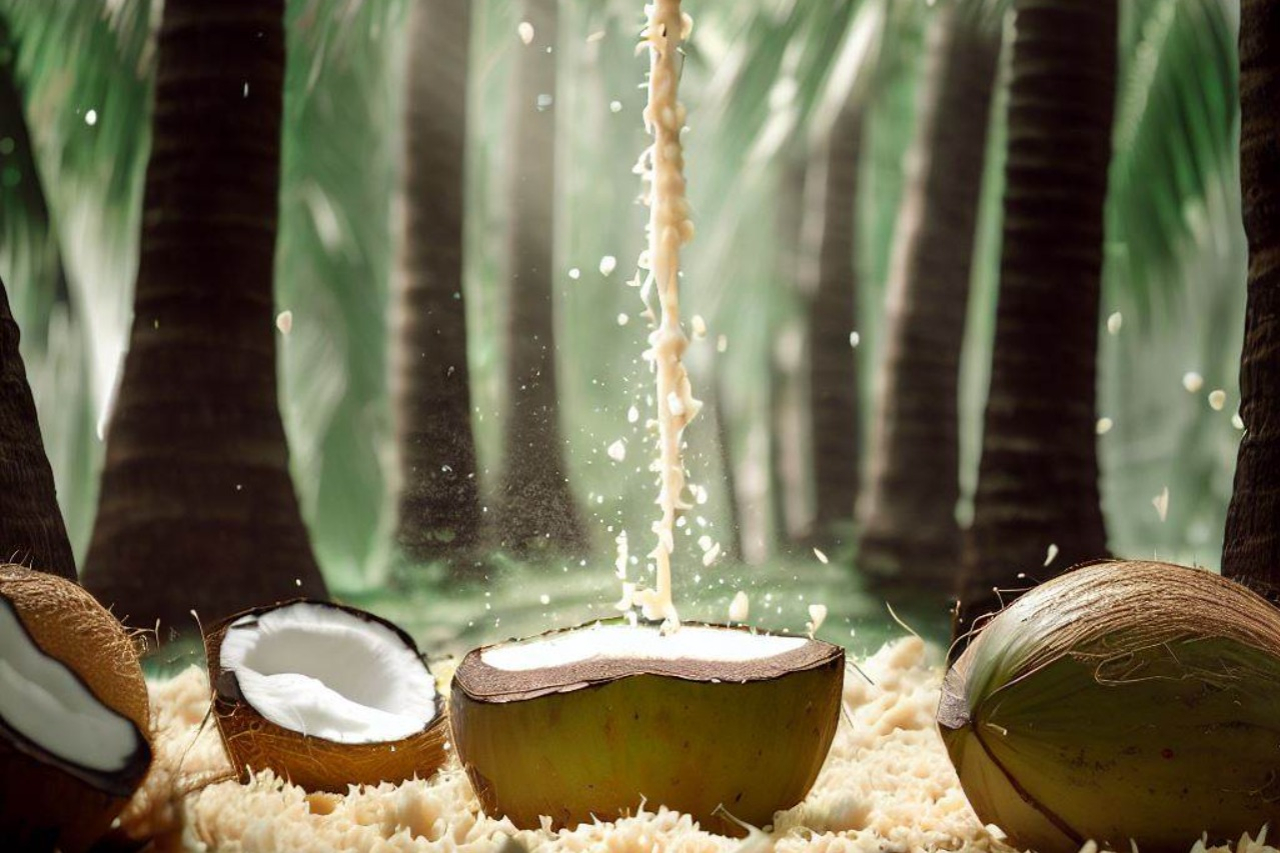
  • Coconut Wax Candles: 10 Benefits and What to Know

    Coconut Wax Candles: 10 Benefits and What to Know

    Coconut wax has become increasingly popular in modern candle making, particularly in premium container candles and plant-based wax blends.

    It is valued for its soft texture, pale appearance and compatibility with other vegetable waxes. But some of the claims surrounding coconut wax — that it is completely soot-free, universally more sustainable or always longer-burning — go further than the evidence supports.

    So what are the real benefits of coconut wax, and why do candle makers use it?

    What Is Coconut Wax?

    Coconut wax is made from coconut oil that has been processed to increase its melting point, usually through hydrogenation.

    Ordinary coconut oil melts at around room temperature, which makes it too soft for many candle applications. Hydrogenation changes some of the fats within the oil and raises the melting point, creating a firmer material that can be used as a wax.

    Some commercial coconut waxes are made entirely from hydrogenated coconut oil, while many candle-grade products are blends containing coconut alongside soy, rapeseed, paraffin or other waxes.

    10 Benefits of Coconut Wax for Candles

    1. It Comes from a Plant-Based Feedstock

    Coconut wax begins with coconut oil, giving it a renewable agricultural starting material.

    This is one reason it appeals to candle makers looking for alternatives to petroleum-derived waxes such as paraffin.

    Renewable does not automatically mean environmentally impact-free, however. Coconut cultivation, processing, transport and land use all contribute to the overall footprint.

    2. It Has a Smooth, Creamy Appearance

    Coconut wax is generally pale and soft, which can give container candles a smooth, understated finish.

    Its appearance is one reason it is frequently used in premium-looking candle formulations.

    3. It Has Very Little Natural Odour

    Refining removes most of the characteristic coconut aroma from the oil.

    A coconut wax candle therefore does not normally smell like coconuts unless coconut fragrance has deliberately been added.

    Its relatively neutral base makes it useful for scented candles because the chosen fragrance can remain the dominant aroma.

    4. It Works Well in Container Candles

    Coconut wax tends to have a relatively low melting point and a soft texture.

    Those characteristics can work particularly well in candles poured into jars or other containers, where the vessel supports the wax as it softens.

    The same softness can make pure coconut wax less suited to some freestanding candles unless it is hardened or blended.

    5. It Blends Easily with Other Waxes

    This is arguably one of coconut wax’s most useful properties.

    Coconut wax is commonly blended with soy, rapeseed, beeswax and other waxes to adjust properties such as hardness, melting point, appearance and burn behaviour.

    A wax blend is not a compromise or a sign of lower quality. Blending allows a candle maker to create a formulation suited to the particular vessel, wick and fragrance being used.

    6. It Can Improve the Finish of a Wax Blend

    Some grades of coconut wax are specifically sold as additives for other candle waxes.

    Depending on the formulation, adding coconut wax can improve characteristics such as surface finish, softness and adhesion to the sides of a container.

    The exact result depends on the wax blend and manufacturing process, so this is not identical across every coconut wax product.

    7. It Can Perform Well with Fragrance

    Coconut-based waxes are widely used in scented container candles and can perform very well with fragrance oils.

    However, claims that coconut wax always produces a stronger scent throw than soy, paraffin or every other wax are too simplistic.

    Fragrance performance depends on the complete candle formulation, including the wax blend, fragrance concentration, wick, vessel and cure time.

    8. It Gives Candle Makers Plenty of Formulation Flexibility

    Because coconut wax is relatively soft, it can be used to alter the behaviour of harder waxes.

    This gives candle makers considerable flexibility when developing a wax blend for a particular container or fragrance.

    Different proportions can produce noticeably different melting, setting and burning characteristics.

    9. Pure Coconut Wax Is Animal-Free

    Pure coconut wax is made from vegetable oil rather than an animal-derived material such as beeswax.

    That makes it suitable as the wax component of a vegan candle, although the rest of the candle — including fragrance, dyes and other ingredients — also needs to meet the same standard before the finished product can properly be described as vegan.

    10. It Offers an Alternative to Traditional Candle Waxes

    Perhaps the simplest benefit is choice.

    Coconut wax gives candle makers another useful raw material alongside soy, rapeseed, beeswax and paraffin.

    Each has different strengths and limitations, and modern candle formulations increasingly use blends rather than trying to make one wax perform every task.

    Does Coconut Wax Burn Longer?

    You will often see coconut candles advertised as slow-burning or longer-lasting.

    A coconut-based wax can certainly be formulated into a slow and efficient candle, but wax type alone does not determine burn time.

    The size and type of wick, vessel diameter, fragrance load, wax blend and overall candle design all influence how quickly the fuel is consumed.

    It is therefore better to compare the tested burn times of individual candles than assume every coconut wax candle will outlast every soy or paraffin candle.

    Is Coconut Wax Soot-Free?

    No combustible candle wax should be described as completely soot-free.

    A properly designed coconut-based candle may burn with very little visible soot, but combustion is affected by much more than the wax.

    A wick that is too long, a poorly matched wick, excessive fragrance or a flame disturbed by draughts can all increase smoke and soot.

    Keeping the wick properly trimmed is therefore important regardless of which wax the candle contains.

    Is Coconut Wax Eco-Friendly?

    Coconut wax has a renewable plant-based feedstock, which is a genuine distinction from petroleum-derived paraffin.

    But calling any candle wax simply “eco-friendly” can hide a much more complicated supply chain.

    Coconut production still requires agricultural land, processing, energy and transport. Environmental impact can also vary significantly by producing region and farming practices.

    There is therefore no sound basis for saying that coconut wax causes no deforestation or has no environmental drawbacks.

    Its renewable origin is an advantage, but sustainability should be considered across the whole supply chain rather than judged from the name of the wax alone.

    Is Coconut Wax Better Than Soy Wax?

    Neither wax is universally better.

    Soy and coconut are both plant-derived materials that can be formulated into good-quality candles.

    Soy wax tends to be firmer than coconut wax and is extremely common in container candles. Coconut wax is softer and is frequently used as part of a blend.

    A coconut-and-soy blend can therefore make considerable sense: coconut can contribute softness and finish while soy contributes additional structure.

    The quality of the finished candle still depends on how the complete formulation has been designed and tested.

    Coconut Wax vs Paraffin Wax

    The clearest difference is their origin.

    Coconut wax begins with a renewable agricultural oil, while paraffin wax is derived from petroleum refining.

    That does not mean paraffin candles are automatically unsafe or that coconut candles are automatically clean-burning.

    Candle emissions depend on the complete formulation and how the candle is burned.

    For a more detailed comparison, see our guide to soy wax and paraffin wax.

    Why Is Coconut Wax Often Used in a Blend?

    Pure hydrogenated coconut oil can have a relatively low melting point and be very soft.

    Blending it with a firmer wax allows manufacturers to adjust characteristics such as:

    • melting point
    • hardness
    • surface finish
    • glass adhesion
    • fragrance performance
    • burn behaviour

    For that reason, seeing “coconut wax blend” on a candle should not be viewed negatively. In many cases, blending is precisely what makes the wax suitable for a dependable container candle.

    Is All Coconut Wax the Same?

    No.

    One product labelled coconut wax may be almost entirely hydrogenated coconut oil, while another may contain coconut wax as one component of a larger blend.

    The melting point, hardness and recommended fragrance load can therefore vary substantially between suppliers.

    For candle makers, the manufacturer’s technical data for the particular wax is more useful than general rules about “coconut wax”.

    Are Coconut Wax Candles Better?

    Coconut wax has several genuinely useful qualities, particularly for modern scented container candles.

    It is plant-derived, soft, pale, relatively neutral in smell and highly useful in wax blends.

    But it is not a miracle material. It is not inherently soot-free, it does not guarantee a longer burn, and its environmental impact cannot be reduced to the word “coconut”.

    The better question is not whether coconut wax is universally superior, but whether the candle maker has used it well.


    More candle guides: learn how soy wax is produced, compare soy wax and paraffin wax, or read our Candle Care Guide.