
Yes, candles can become cold enough for their wax to crack, contract or change appearance. However, most candle wax is already solid at room temperature, so there is no single freezing temperature at which every candle suddenly changes. If a candle has been exposed to frost or freezing conditions, let it return to room temperature naturally and inspect it before lighting.
When the first proper frosts arrive in the Scottish Highlands, it is easy to forget about candles left in a delivery van, an unheated porch or a garden shed. A jar candle that looked perfectly normal the previous evening may develop pale patches, a gap between the wax and glass, or fine cracks across its surface.
These changes do not automatically mean the candle is ruined. Some are familiar characteristics of cooling wax. Others deserve more attention, particularly when the container itself has been damaged or moisture has reached the wick.
The important distinction is between a change in appearance and a change that could affect safe burning.
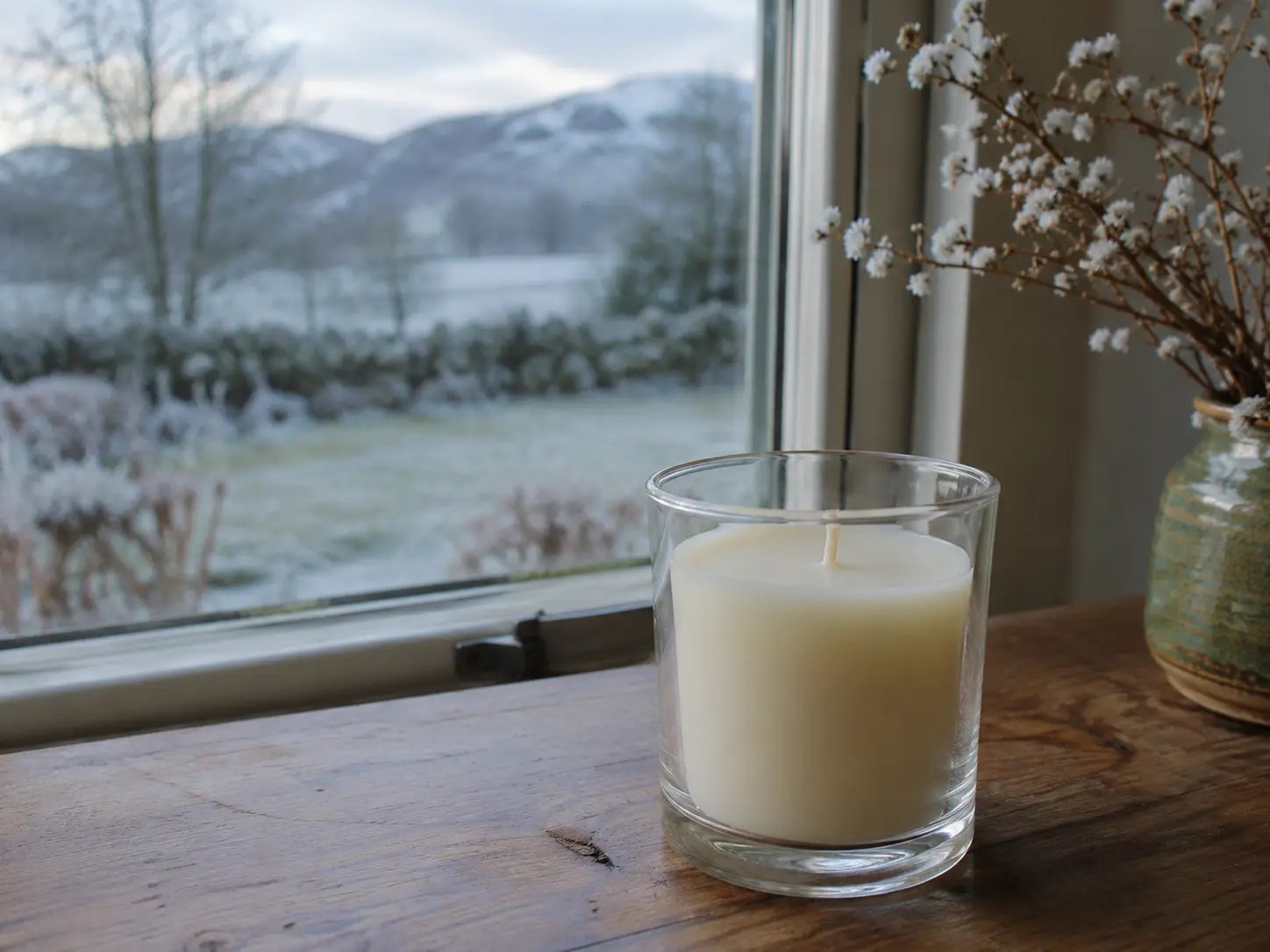
Can candle wax actually freeze?
A finished candle behaves differently from water. Water freezes at approximately 0°C (32°F) under normal atmospheric conditions, but candle waxes are generally solid at ordinary indoor temperatures.
Wax does not need to reach freezing conditions to harden. It solidifies as it cools below its melting range, which varies according to the material and formulation. Many finished candles also contain blends of different waxes, fragrance materials, colourants or other additives.
For that reason, a melting-point figure quoted for one wax cannot tell you exactly how a finished scented candle will behave in an unheated building or during a freezing delivery journey.
What matters more is how low the temperature falls, how quickly it changes, the type of wax and whether the candle is held in glass or another container.
What happens to candles in cold weather?
Several changes can occur when a candle becomes very cold. Some are purely visual; others require inspection before the candle can be used again.
| What you notice | What it may mean |
|---|---|
| White or cloudy patches on the wax | Often wax frosting or crystallisation, particularly with soy-based waxes. Usually cosmetic. |
| Gaps between the wax and glass | The wax may have contracted and pulled away from the vessel. Often a cosmetic adhesion issue. |
| Fine cracks on the wax surface | Cooling and contraction may have produced surface cracks. Significant cracking requires further assessment. |
| Water droplets outside the jar | Likely condensation forming on the cold glass. Allow the candle to warm and dry fully. |
| Water inside the jar or on the wick | Possible moisture contamination. Do not light until the issue has been assessed. |
| Cracked or chipped glass | A genuine safety concern. Do not burn the candle. |
| Wick detached or substantially off-centre | The candle may no longer burn as designed. Do not relight; contact the maker. |
Why candle wax can shrink or crack in the cold
Most materials change dimensions as their temperature changes, and candle wax is no exception. As wax cools, it can contract. Different formulations respond differently, so one candle may show visible changes while another remains apparently unaffected.
In a glass container, contraction can create small gaps where the wax previously touched the inside wall. The glass and wax do not necessarily expand or contract at the same rate.
These gaps are sometimes called wet spots in candle making, although they are not actually wet. They are areas where the wax is no longer adhering to the glass, changing how light passes through the container.
Small adhesion marks are not necessarily a manufacturing defect or a sign of unsafe burning. They can occur in well-made candles, including those using vegetable waxes.
Cracks need a little more judgement. Fine surface lines can be a cosmetic result of wax contraction, but deep splits, displaced sections or extensive structural damage should not be dismissed as harmless.
If the wax has separated into substantial pieces, developed a deep crack near the wick or otherwise changed significantly, leave it unlit and ask the maker for advice.
Why soy candles can develop white patches
A pale, powdery-looking or crystalline pattern on the surface of a soy candle is often described as frosting. Despite the name, it is not frozen water.
Soy wax can form visible crystalline structures as it solidifies and changes over time. Temperature fluctuations may make these patterns more noticeable, particularly on coloured candles or against the side of a clear glass vessel.
Ordinary soy-wax frosting is generally an appearance issue rather than evidence that the candle has become unsafe or lost its fragrance.
However, do not assume that every unusual white deposit is harmless wax frosting. An unfamiliar growth, contamination or unexplained residue should be assessed before use, especially if the candle has been stored in damp conditions.
There is no need to scrape away normal wax frosting or attempt to remelt the surface to improve its appearance. A candle does not have to look perfectly smooth to function as intended.
Can freezing temperatures damage a glass candle jar?
Glass deserves particular attention because the consequences of a damaged container are more serious than a cosmetic change in wax.
A sound candle jar does not automatically crack because the surrounding temperature falls below freezing. Nevertheless, existing flaws, physical impacts and significant temperature changes can all contribute to the risk of breakage.
When a very cold vessel is exposed to substantial heat, different areas may warm and expand at different rates. This is one reason it is unwise to bring a freezing-cold container directly into contact with a flame or an improvised heat source.
Never try to warm a cold candle using boiling water, an oven, microwave, hairdryer, radiator or direct flame. Heating the outside of a jar is not a reliable way to repair wax and may create additional hazards.
Before using any container candle, examine the glass carefully, including its base and rim. If it is cracked, chipped or otherwise damaged, do not light it, even if the wax itself appears normal.
Condensation: what happens when a cold candle comes indoors?
Imagine bringing a glass candle into a warm room after it has spent the night in a cold car.
The glass may initially be colder than the surrounding air. If its surface is below the air’s dew point, moisture can condense into tiny droplets, much like the water that appears on the outside of a chilled drinking glass.
This is a different phenomenon from wax frosting or the so-called wet spots caused by wax contraction.
Condensation on the outside of an otherwise sound jar is not proof that the candle has been damaged. Allow the vessel to warm naturally and become completely dry before handling it for use.
Water inside the candle is another matter. Moisture may reach the wax surface or wick through poor storage, damaged packaging or exposure to damp conditions.
Do not light a candle while its wick or wax surface is wet. If there is pooled water, persistent dampness or suspected contamination inside the container, seek the maker’s advice rather than trying to dry or repair the candle with heat.
How to warm a cold candle safely
If a candle has been left in freezing conditions or arrives unusually cold, the best approach is straightforward: allow it to acclimatise slowly, then inspect it.
- Bring the candle indoors. Choose a dry room with a reasonably stable temperature, away from direct sunlight, radiators and other heating appliances.
- Keep the jar upright. Put it on a stable surface where it will not be knocked or exposed to sudden temperature changes.
- Allow it to warm naturally. Do not apply heat to speed up the process. A large candle may take longer to acclimatise than a small one.
- Wait for any condensation to disappear. Make sure the vessel is dry, and check for moisture inside the candle.
- Inspect the container and wax. Look for cracks, chips, significant separation or other damage that was not present before.
- Check the wick. It should remain securely attached and correctly positioned, with no moisture or foreign material around it.
- Follow the candle’s normal care instructions. Only light it once it has returned to room temperature and there is no sign of damage or contamination.
There is no universal waiting time. The size of the candle, its packaging, the starting temperature and the warmth of the room all affect how quickly it acclimatises. Do not use the outside of the glass feeling slightly warmer as proof that the entire candle is ready.
What if your candle arrives frozen or extremely cold?
Winter deliveries present a particular challenge for scented candles. A parcel may move between heated buildings, cold vehicles, sorting facilities and outdoor delivery locations before reaching its destination.
A candle arriving cold is not, by itself, evidence of poor quality or damage. However, it is sensible to avoid unboxing and immediately lighting a candle that has spent hours in freezing conditions.
If the parcel is intact and dry, leaving it closed while it gradually approaches indoor temperature can help limit immediate exposure of the cold contents to warmer, humid air.
Once the package has acclimatised, unpack the candle carefully and examine the vessel. Look for evidence of impact damage as well as changes to the wax.
If the glass has cracked or the wick has become detached, photograph the damage and contact the retailer or maker. Do not attempt to test the candle by lighting it.
Where should you store candles during winter?
The best place to store a candle is usually a cool, dry indoor cupboard or shelf where the temperature remains fairly stable.
It does not need to be especially warm. The aim is to avoid prolonged exposure to temperature extremes, dampness and strong sunlight.
For reliable storage:
- Choose a dry indoor location. Avoid damp cellars, sheds, garages and unheated outbuildings where temperatures can fluctuate sharply.
- Avoid direct sunlight and heat. Radiators, fireplaces and sunny window ledges can soften wax, discolour candles or affect fragrance over time.
- Keep container candles upright. Store glass jars securely so they cannot fall or knock against one another.
- Protect them from dust. Use a supplied lid or appropriate protective packaging when the candle is fully cold and dry.
- Store taper and dinner candles carefully. Long, unsupported candles can bend or warp. Storing them flat in a suitable protective box can help preserve their shape.
- Keep fragrances away from prolonged light exposure. A dark cupboard offers more consistent storage than an exposed windowsill.
A spare bedroom cupboard is generally a better choice than an unheated shed, even if the shed feels pleasantly cool for much of the year.
Does cold weather affect a scented candle’s fragrance?
Cold temperatures can influence how strongly a fragrance is perceived, but that does not mean a candle has permanently lost its scent.
Fragrance materials are less readily released into the air at lower temperatures. A candle that smells relatively faint while very cold may seem more fragrant after returning to normal indoor conditions.
However, finished scented candles are complex formulations. Their performance depends on the wax, fragrance, wick and manufacturing process, not simply on how cold they were during storage.
There is no sound general reason to freeze a scented candle to preserve its fragrance. Stable, cool, dark and dry storage is the more dependable approach.
If you notice unexplained pools of liquid fragrance, significant separation or a substantial change in the candle’s structure after storage, contact the maker before burning it.
Does putting candles in the freezer make them burn longer?
No reliable general benefit has been established for freezing candles to extend their burn time.
The idea sounds plausible: cold wax is harder, so perhaps it should melt more slowly and last longer. But the performance of a burning candle depends on how its wick supplies melted wax to the flame and on the candle’s overall design.
Starting with a colder candle does not change the way that formulation and wick are intended to operate once the candle has reached its normal burning conditions.
More importantly, deliberately freezing candles may introduce cracking or other damage. It is not worth compromising a candle’s integrity for an unproven increase in burn time.
To get the best use from a candle, prepare the wick correctly, keep it away from draughts and follow the maker’s burn-time limits. Our candle care guide explains the fundamentals of safe, even burning.
When should you stop using a candle after cold exposure?
Cold-related changes are not all equally serious. A small cosmetic mark on the wax is very different from a damaged container or a displaced wick.
Do not light or relight a candle if:
- the glass has cracked, chipped or otherwise become damaged;
- the wick or its securing base has detached;
- the wick has shifted substantially towards the side of the container;
- water or unexplained liquid is present in the wax or around the wick;
- the wax has split into substantial pieces or developed significant structural damage;
- you suspect contamination or another problem that cannot be confidently identified.
Do not attempt to repair a candle by forcing the wax back into position, scraping around its wick or applying heat to the glass.
If the candle has a cosmetic imperfection but the vessel, wick and surrounding wax are sound, the change may not affect its intended use. When uncertain, ask the maker for product-specific guidance rather than experimenting.
Frequently asked questions
At what temperature do candles freeze?
There is no universal freezing point for finished candles. Most candle wax is already solid at room temperature, and different wax blends have different melting and solidification ranges. Freezing weather may make some waxes contract, crack or change appearance, but the exact response depends on the formulation.
Can a frozen candle explode?
A candle does not normally explode simply because it has been exposed to frost. The more relevant concerns are damaged glass, extreme temperature changes and unsafe burning conditions. Never light a candle in a cracked container or use direct heat to warm a very cold jar.
Can I leave candles in my car overnight in winter?
It is better not to use a car for long-term candle storage. Overnight temperatures can fall below freezing, while sunlight can warm the interior substantially at other times. If a candle has been left in a cold car, bring it indoors, allow it to acclimatise and inspect it before use.
Will a candle be ruined if it freezes during delivery?
Not necessarily. Temporary cold exposure can cause cosmetic changes without permanently affecting a candle. However, significant wax damage, moisture, broken glass or a displaced wick should be assessed before burning. Do not assume a candle is safe simply because it has warmed up again.
How long should a cold candle sit before lighting?
There is no fixed time suitable for every candle. Allow it to reach ordinary indoor temperature naturally, including the wax and container, and ensure that no condensation remains. Larger candles and those arriving in very cold packages may take longer. Inspect the candle thoroughly before lighting.
Is white frosting on a soy candle the same as ice?
No. Soy-wax frosting is a crystalline change in the wax itself, not a coating of frozen water. It is generally cosmetic. Actual moisture droplets are a separate issue and should not be confused with harmless wax crystallisation.
Should I put candles in the fridge to keep them fresh?
Refrigeration is unnecessary for normal candle storage. It can introduce unwanted temperature changes and moisture concerns, particularly when candles are removed into warmer air. A cool, dry, shaded indoor cupboard is a more practical choice.
The simple answer
A cold candle is not automatically a damaged candle. Wax may contract, develop a frosted appearance or pull slightly away from its container without losing its usefulness.
What matters is the condition of the candle after it has warmed. An intact vessel, secure wick and dry, undamaged wax are far more important than a perfectly smooth surface.
If a candle has spent a frosty night in a vehicle, porch or outbuilding, let it return to room temperature naturally. Never hurry the process with direct heat, and do not burn a candle showing signs of genuine damage.
For the winter months and beyond, stable, cool and dry storage is the simplest way to protect your candles.
Sources and further information
- National Candle Association — Candle science and freezing guidance
- National Candle Association — Candle care and storage advice
- CandleScience — Soy wax frosting, cracking and glass adhesion
- Scottish Fire and Rescue Service — Candle safety
- British Candlemakers Federation — Candle safety instructions
- Met Office — Understanding dew and condensation


