Author: Admin

  • Why You Shouldn’t Put Out Candles with the Lid

    Why You Shouldn’t Put Out Candles with the Lid

    What is the best way to put out a candle? In most cases, use a candle snuffer or gently blow out the flame, then check that the wick is no longer glowing.

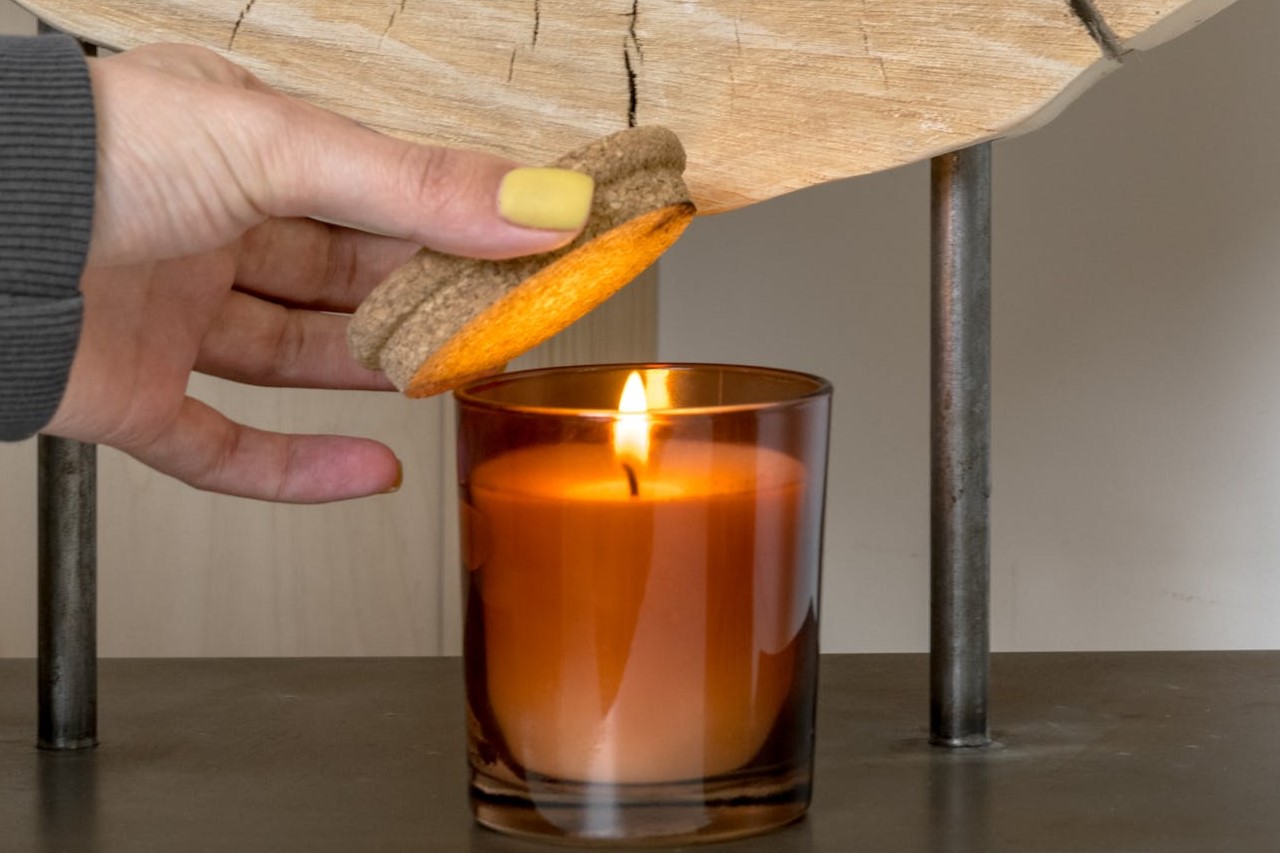
    Using the candle’s ordinary storage lid is not usually the method we recommend unless the manufacturer specifically says that the lid has been designed for extinguishing the flame.

    And one method should always be avoided: never use water to put out a candle.

    How to Put Out a Candle Safely

    Extinguishing a candle is simple, but doing it carefully helps prevent hot wax from splashing, keeps the wick in better condition and makes sure the flame really is out before you leave the room.

    The simplest methods are:

    • use a candle snuffer
    • gently blow out the flame
    • use another extinguishing method only if the candle manufacturer specifically recommends it

    Afterwards, check the wick carefully. A flame may disappear while the tip of the wick continues to glow, so make sure it is completely extinguished.

    Do not touch or move the candle until the wax and vessel have cooled.

    Can You Put Out a Candle with the Lid?

    Sometimes — but only if the lid is intended to be used that way.

    Covering a flame removes its supply of oxygen, which will eventually extinguish it. That does not mean every decorative or storage lid should automatically be used as a candle snuffer.

    Candle lids are made from different materials and are designed in different ways. Some manufacturers specifically sell metal lids that can safely extinguish the flame, while others explicitly warn customers not to use their lids for this purpose.

    The sensible rule is therefore to follow the instructions supplied with your individual candle.

    If the manufacturer does not say that the lid is suitable for extinguishing, use a snuffer or gently blow the flame out instead.

    Why We Prefer Not to Use the Candle Lid

    For a normal container candle, the lid is primarily useful after the candle has cooled.

    Using a separate snuffer keeps a hot, sooty lid away from the wax and removes any uncertainty about whether the lid material was designed to be exposed directly to a flame.

    Once the candle has completely cooled, replace the lid to help keep dust, wick trimmings and other debris away from the wax.

    The Best Ways to Put Out a Candle

    1. Use a candle snuffer

    A candle snuffer is designed specifically for the job.

    Place the bell of the snuffer carefully over the flame until it goes out, then remove it once you are sure the wick is no longer burning.

    This method avoids blowing directly onto the pool of liquid wax and is particularly useful for candles with larger or deeper containers.

    2. Gently blow out the flame

    Despite some common candle advice online, gently blowing out a candle is an acceptable way to extinguish it.

    The important word is gently. Blowing forcefully across a large pool of hot liquid wax can cause splashing.

    Blow steadily towards the flame, check that the wick is completely out and leave the candle undisturbed while it cools.

    3. Use a lid only when instructed

    If the candle manufacturer explicitly states that its lid is designed to extinguish the candle, follow those instructions.

    Otherwise, do not assume that a decorative glass, wooden or metal lid is intended to be placed over a burning candle.

    Never Put Out a Candle with Water

    Water is one extinguishing method you should avoid completely.

    Pouring water onto hot candle wax can cause the wax to splatter. The sudden temperature change may also damage a hot glass container.

    If you need to extinguish a normal candle, use a snuffer or gently blow it out instead.

    Should You Use a Wick Dipper?

    A wick dipper is another candle-care tool sometimes used to extinguish a flame.

    It works by briefly pushing the burning wick into the liquid wax, cutting off the flame, before lifting the wick back into an upright position.

    If you use one, return the wick to the centre before the wax begins to set.

    A snuffer is simpler for most people, but both tools avoid blowing directly across the melted wax pool.

    Why Is My Candle Smoking After I Put It Out?

    A small amount of smoke immediately after extinguishing a candle is normal. The hot wick can continue releasing vapour for a short time after the flame disappears.

    If your candle produces excessive smoke while it is actually burning, the problem may instead be a wick that is too long or a flame being disturbed by a draught.

    Once the candle has cooled, trim the wick to around 6 mm / ¼ inch before lighting it again.

    What Should You Do After Extinguishing a Candle?

    Once the flame is out:

    • check that the wick has stopped glowing
    • leave the candle on its heat-resistant surface
    • do not touch or move the vessel while it is hot
    • allow the wax to cool and solidify
    • replace the lid only once the candle has cooled
    • trim the wick before the next burn

    A Few Other Candle Safety Basics

    • Never leave a burning candle unattended.
    • Keep candles away from children and pets.
    • Keep them away from curtains, bedding, paper and other materials that can catch fire.
    • Avoid open windows, fans and other draughts.
    • Place the candle on a stable, heat-resistant surface.
    • Keep the wax pool clear of matches and wick debris.
    • Follow the manufacturer’s recommended maximum burn time.
    • Do not burn a container candle all the way to the bottom.

    For more detail, see our complete Candle Care Guide.

    So, How Should You Extinguish a Candle?

    For most candles, the answer is straightforward: use a candle snuffer or gently blow out the flame.

    Do not use water, and do not assume that the candle’s lid is designed as an extinguisher unless the manufacturer specifically tells you that it is.

    Then check that the wick is completely out and allow everything to cool before moving or covering the candle.

    It only takes a few seconds, but it is one of the most important parts of good candle care.


    More candle guides: read our Candle Care Guide, learn how to fix an uneven-burning candle, or find out where to place scented candles safely.

  • Is Paraffin Wax Biodegradable?

    Is Paraffin Wax Biodegradable?

    Is paraffin wax biodegradable? Yes, under the right conditions — but the answer is more complicated than simply calling paraffin either biodegradable or non-biodegradable.

    Paraffin wax is made primarily from long-chain hydrocarbons derived from petroleum. Certain microorganisms are capable of breaking those hydrocarbons down, and scientific studies have demonstrated the biodegradation of paraffin wax by both bacteria and fungi.

    However, paraffin wax does not necessarily break down quickly in ordinary soil, water or landfill conditions. Its rate of degradation depends heavily on factors such as temperature, oxygen, microorganisms and the physical form of the wax.

    What Is Paraffin Wax?

    Paraffin wax is a petroleum-derived wax made from a mixture of saturated hydrocarbons.

    It is generally separated from petroleum fractions during refining and then further processed and purified to produce different grades of wax.

    Paraffin wax is commonly used in:

    • candles
    • cosmetics and personal-care products
    • food and packaging applications
    • polishes and coatings
    • industrial products

    Its properties — including a relatively predictable melting point, neutral colour and ability to carry fragrance — have made it one of the most widely used candle waxes.

    So, Is Paraffin Wax Biodegradable?

    Yes, microorganisms can biodegrade paraffin wax.

    Paraffin is made largely from long-chain alkanes. Although these hydrocarbons can be persistent, various bacteria and fungi have evolved metabolic processes capable of using them as a carbon source.

    Laboratory studies have identified microorganisms capable of breaking down substantial amounts of paraffin wax under controlled conditions.

    That means describing paraffin as completely “non-biodegradable” is inaccurate.

    Does Paraffin Wax Biodegrade Quickly?

    Not necessarily.

    There is an important difference between something being capable of biodegrading and something being readily biodegradable.

    Long-chain hydrocarbons have low water solubility and can be relatively difficult for microorganisms to access. Their degradation rate can therefore vary considerably depending on the environment.

    Conditions that can influence biodegradation include:

    • the microorganisms present
    • temperature
    • availability of oxygen
    • moisture
    • nutrient availability
    • the size and surface area of the wax

    A finely dispersed hydrocarbon exposed to suitable microorganisms may behave very differently from a solid lump of candle wax sitting in cool soil.

    How Does Paraffin Wax Biodegrade?

    Microorganisms capable of degrading paraffin use enzymes to begin breaking down its hydrocarbon chains.

    The hydrocarbons are progressively transformed into smaller compounds that the microorganisms can use during metabolism.

    Researchers have identified several types of bacteria capable of degrading long-chain paraffins, including species of Rhodococcus, Geobacillus and Pseudomonas.

    Fungal enzymes have also been shown to degrade components of paraffin wax under laboratory conditions.

    Will Candle Wax Biodegrade in a Landfill?

    This is much harder to answer with a useful timeframe.

    A landfill does not necessarily provide the ideal temperature, oxygen, moisture and microbial conditions required for rapid degradation.

    So although the hydrocarbons in paraffin can be biodegraded, that should not be interpreted as meaning a discarded paraffin candle will quickly disappear after being thrown away.

    It is also difficult to give a meaningful universal figure such as “paraffin takes five years to decompose”. The rate is too dependent on environmental conditions for a single number to apply reliably.

    Is Paraffin Wax Bad for the Environment?

    Biodegradability is only one part of a material’s environmental impact.

    The clearer environmental distinction is that paraffin is derived from petroleum, a non-renewable fossil resource.

    Plant-derived candle waxes such as soy, rapeseed and coconut begin with renewable agricultural feedstocks.

    That does not automatically make every vegetable wax candle environmentally superior. Agriculture also involves land use, processing, transport, energy and other environmental impacts.

    A proper comparison therefore needs to consider the whole product rather than relying on one label such as “natural”, “renewable” or “biodegradable”.

    What About Soy Wax?

    Soy wax is made from processed and hydrogenated soybean oil, giving it a renewable agricultural starting material rather than a petroleum one.

    But describing soy wax as universally sustainable while describing paraffin as universally environmentally harmful is too simplistic.

    Where the soy is grown, farming practices, processing, transportation and the formulation of the finished candle all matter.

    You can read more in our guide to soy wax vs paraffin wax.

    Are Beeswax and Coconut Wax Biodegradable?

    Beeswax and plant-derived waxes can also be broken down biologically, but again, “biodegradable” does not tell us everything about their environmental impact.

    Different waxes have different supply chains, production processes and performance characteristics.

    Rather than assuming one wax is environmentally perfect, it is more useful to consider sourcing, formulation, packaging, candle performance and how much material ultimately goes to waste.

    Can Paraffin Wax Be Composted?

    Biodegradable does not necessarily mean suitable for a home compost heap.

    Because paraffin consists of petroleum-derived hydrocarbons and can degrade slowly under ordinary conditions, we would not recommend deliberately adding leftover paraffin candle wax to household compost.

    Check local waste guidance for the most appropriate way to dispose of candle wax and its container.

    So, Is Paraffin Wax Biodegradable?

    Yes — paraffin wax can biodegrade, but it may do so slowly unless suitable environmental conditions and microorganisms are present.

    It is therefore inaccurate to say that paraffin wax is completely non-biodegradable. It is equally misleading to assume that it will rapidly decompose simply because microorganisms are capable of breaking it down.

    Its petroleum origin remains an important environmental consideration, but biodegradability and renewability are two different questions.

    As with most material choices, the full picture is more nuanced than a simple “good wax versus bad wax” comparison.


    More candle guides: compare soy wax and paraffin wax, learn how soy wax is produced, or read our Candle Care Guide.

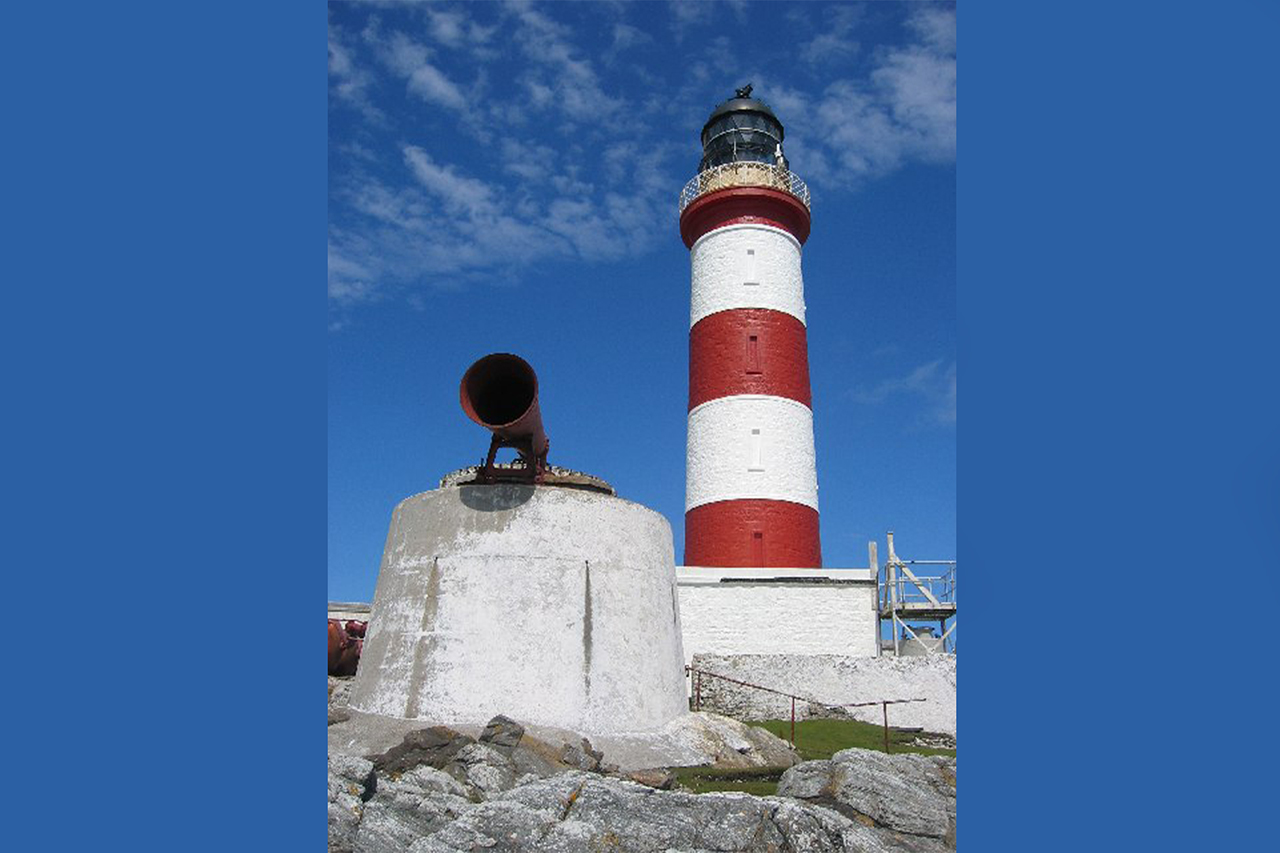
  • Eilean Glas Lighthouse: At the Eastern Edge of Scalpay

    Eilean Glas Lighthouse: At the Eastern Edge of Scalpay

    At the eastern edge of Scalpay, the land narrows towards a red-and-white lighthouse standing above the Minch.

    This is Eilean Glas Lighthouse, one of the oldest lighthouse stations established by the Northern Lighthouse Commissioners and one of the most distinctive landmarks in the Outer Hebrides.

    Its position is part of the appeal. Reach the lighthouse on foot and there is no town, road or visitor centre around it — just rock, moorland, sea and a tower that has been guiding ships through these waters since 1789.

    For anyone interested in Scottish lighthouses, maritime history or simply seeing another side of the Minch, Eilean Glas is worth the walk.

    Where is Eilean Glas Lighthouse?

    Eilean Glas stands on the eastern side of Scalpay, a small island lying just off Harris in the Outer Hebrides.

    Scalpay is connected to Harris by a road bridge, so reaching the island itself is straightforward. From there, the final journey to the lighthouse is made on foot across the eastern end of the island.

    Beyond the lighthouse lies the Minch, the stretch of sea separating the Outer Hebrides from the north-west Highlands of mainland Scotland.

    On a clear day, the position feels less isolated than the map might suggest. Skye and the mountains of the mainland can appear across the water, while the Harris hills rise behind Scalpay in the opposite direction.

    One of the earliest Northern Lights

    The history of Eilean Glas reaches back to the very beginning of Scotland’s organised lighthouse network.

    The Commissioners of Northern Lighthouses were established in 1786 to improve navigation around Scotland’s dangerous coastline. Eilean Glas was one of their earliest projects.

    Work began in the late 1780s under engineer Thomas Smith. Construction was not entirely straightforward: local work had already begun before Smith’s masons arrived, and when he inspected the site he discovered that the tower had been built larger than shown on his plans.

    Rather than start again, Smith allowed construction to continue.

    The light was first exhibited on 10 October 1789.

    For sailors approaching the Hebrides, that new light marked a significant improvement. The coastline around western Scotland was difficult to navigate, particularly at night and in poor weather, and purpose-built lights provided fixed reference points where previously there had been very few.

    Robert Stevenson and the lighthouse we see today

    The original lighthouse did not remain unchanged for long.

    By the early 19th century, Robert Stevenson had succeeded Thomas Smith as engineer to the Northern Lighthouse Board. Stevenson would become one of the defining figures in Scottish lighthouse engineering, responsible for lights around some of the country’s most difficult coasts.

    In 1824, a new tower was constructed at Eilean Glas under his supervision.

    That is essentially the lighthouse visitors recognise today: a tall cylindrical tower standing above the eastern shore of Scalpay.

    The present tower is around 30 metres high. Its broad red bands make it particularly easy to recognise in daylight, distinguishing it from the many plain white lighthouse towers found elsewhere around Scotland.

    The light itself stands at an elevation of about 43 metres above sea level and today has a nominal range of 18 nautical miles.

    Why the red and white bands?

    A lighthouse has to be identifiable during the day as well as at night.

    The two broad red bands around Eilean Glas act as a daymark, giving the tower a distinctive visual identity that can be recognised from the sea before its light is required.

    They have also become the feature that makes Eilean Glas instantly recognisable in photographs: white tower, red bands, black lantern and the dark Atlantic landscape around it.

    More than two centuries of changing technology

    Although the basic purpose of the lighthouse has remained the same, almost everything about the way its light operates has changed.

    In 1852, Eilean Glas was converted to a revolving lens system. A fog signal was added in 1907, when the character of the light was also changed to a flashing signal.

    For generations, lighthouse keepers lived and worked at the station, maintaining the light, machinery and buildings in a place where reliability mattered regardless of weather.

    That era ended at Eilean Glas in 1978, when the lighthouse was converted to automatic operation.

    The old fog signal was later discontinued, while the lighting equipment continued to evolve. In 2019 the lighthouse underwent another major refurbishment, including the installation of a modern LED optic.

    The technology may be very different from Thomas Smith’s original lamps, but Eilean Glas is still doing essentially the same job more than two centuries later.

    Life at an isolated lighthouse

    It is easy to romanticise lighthouse keeping when looking at Eilean Glas on a clear summer day.

    The reality was built around routine and responsibility.

    Keepers had to maintain the lamps and optical equipment, clean the lantern, inspect machinery and ensure that the light worked when it was needed. Supplies had to reach an isolated station exposed to Atlantic weather, while the keepers and their families lived beside their workplace.

    The first keeper at Eilean Glas was Alexander Reid, who arrived with his family before the light was first illuminated in 1789.

    He remained there for more than three decades. When he retired in 1823, records described him as weather-beaten and stiff after his long exposure on the Point of Glas.

    It is a small surviving detail, but perhaps one of the most revealing. A lighthouse is an elegant landmark from a distance. For the people responsible for keeping it operating, it was also a demanding place to live and work.

    Walking to Eilean Glas Lighthouse

    Part of what makes Eilean Glas memorable is that you cannot simply drive up to it.

    The most straightforward route starts near the end of the public road at the Out End of Scalpay. From the small parking area, a sign points towards Eilean Glas approximately 2.5 kilometres away.

    That makes the direct walk roughly 5 kilometres / 3 miles return.

    The first part follows a track before continuing as a footpath towards the coast. Much of the route is manageable, but the final descent towards the lighthouse becomes steeper and stonier, and the ground can be slippery when wet.

    Strong, waterproof footwear is sensible. This is the Outer Hebrides: even when the forecast looks reasonable, conditions underfoot and overhead can change quickly.

    Parking

    There is a small parking area near the Out End of Scalpay. The space at the very end of the road is required for vehicles to turn and should not be used for parking.

    Can you go inside Eilean Glas Lighthouse?

    No. Eilean Glas remains an operational Northern Lighthouse Board light and the lighthouse tower itself is not open to the public.

    The walk, the exterior of the lighthouse and the surrounding coastal landscape are the attraction.

    The longer Scalpay Heritage Trail

    Walkers wanting a longer day can incorporate Eilean Glas into the circular Scalpay Heritage Trail.

    The full circuit is around 9.8 kilometres / 6 miles and crosses much rougher and boggier terrain than the direct lighthouse route. It takes in more of Scalpay’s moorland and coastline before returning through the island.

    For most visitors whose main aim is simply to see the lighthouse, the direct Out End route is the easier choice.

    The view from the eastern edge of Scalpay

    The reward for the walk is not only the lighthouse.

    Eilean Glas occupies a remarkable position overlooking the Minch. There are few buildings nearby and almost nothing to interrupt the horizon.

    To the east lies open water towards Skye and mainland Scotland. Behind you are Scalpay and the mountains of Harris. Around the lighthouse, exposed rock meets short grass before dropping into the sea.

    It is the sort of place where weather changes the entire character of the landscape.

    In bright conditions the Minch can appear almost placid, with distant land clearly visible across the water. Add low cloud, wind or rain and the same view becomes much more severe.

    Both versions suit the lighthouse.

    Wildlife around Eilean Glas

    The Minch is also an important area for marine wildlife, so it is worth occasionally looking away from the lighthouse and watching the water.

    Dolphins, harbour porpoises and minke whales occur in the wider Minch, while seals and seabirds are common around the Hebridean coastline.

    There is never a guarantee of a sighting, but binoculars are worth carrying. A few quiet minutes scanning the sea can sometimes be more rewarding than rushing straight back along the path.

    What does Eilean Glas mean?

    Eilean is the Gaelic word for island. Glas is less easily squeezed into a single English colour.

    It can refer to shades around grey, green or blue-green depending on context, which is why Eilean Glas is variously translated as something close to Green Island or Grey Island.

    For a rocky Hebridean headland where colour changes constantly with grass, sea, cloud and light, the ambiguity feels rather appropriate.

    Why Eilean Glas is worth visiting

    Eilean Glas is not a polished visitor attraction, and that is part of its appeal.

    You walk across Scalpay to reach it. The lighthouse is closed. There is no café waiting at the end. What you get instead is one of Scotland’s oldest lighthouse sites standing alone above the Minch, with more than two centuries of maritime history behind it.

    The original light appeared here in 1789. Robert Stevenson replaced the tower in 1824. Keepers maintained it through generations of Atlantic weather before automation arrived in 1978. Today an LED light continues to flash from the same headland.

    That continuity is what makes the place special.

    For more than 230 years, ships passing through these waters have been able to look towards the eastern edge of Scalpay and find a light.


    Explore more around the Minch: visit Tiumpan Head, discover the legend of the Blue Men of the Minch, or learn more about the Minch itself.

  • Northern Lights in Scotland: Watching the Aurora Borealis

    Northern Lights in Scotland: Watching the Aurora Borealis

    There are nights in northern Scotland when the sky does something unexpected.

    A pale glow appears above the horizon. It strengthens, stretches into an arc and begins to move. Green may become visible, followed by pink, red or purple. On the strongest nights, great curtains of light seem to ripple across the whole sky.

    These are the Northern Lights — the Aurora Borealis.

    They can be seen from Scotland when solar activity, darkness, cloud cover and geography all come together. Around the Highlands and islands, where artificial light is limited and the northern horizon can be wide open, the chances are better than in most of the UK.

    What causes the Northern Lights?

    The story begins with the Sun.

    The Sun constantly releases a stream of electrically charged particles known as the solar wind. When this material reaches Earth, it interacts with our planet’s magnetic field.

    Energy can build up within the magnetosphere — the magnetic environment surrounding Earth — and eventually send energetic particles down towards the upper atmosphere near the polar regions.

    There, the particles collide with atoms and molecules in the atmosphere. Those atoms briefly gain energy and then release it again as light.

    That glow is the aurora.

    Periods of stronger solar activity can disturb Earth’s magnetic field much more dramatically. Coronal mass ejections, or CMEs, can send huge clouds of magnetised solar material towards Earth and sometimes trigger geomagnetic storms that push visible aurora much farther south than usual.

    Why are the Northern Lights different colours?

    The colour depends mainly on which gases are being excited and how high in the atmosphere the interaction takes place.

    • Green is the most familiar aurora colour and is produced mainly by oxygen.
    • Red can also come from oxygen, but generally much higher in the atmosphere.
    • Blue and pink are associated with nitrogen.
    • Colours can overlap, producing purples, whites and other shades.

    A strong display can be intensely colourful, but many auroras seen from Scotland are much subtler.

    Can you see the Northern Lights in Scotland?

    Yes.

    Scotland is generally the best part of the UK for aurora watching, particularly the Highlands, northern mainland, Outer Hebrides, Orkney and Shetland.

    During stronger geomagnetic storms, aurora can spread much farther south and has occasionally been visible across large parts of Britain.

    Being far north helps, but latitude alone is not enough. You also need darkness, reasonably clear skies and sufficient geomagnetic activity at the same time.

    A perfect aurora forecast is of little use if Scotland is sitting beneath a blanket of cloud.

    Seeing the Northern Lights from the Minch

    The coastline around the Minch is naturally well suited to aurora watching.

    Much of the north-west Highlands and the Outer Hebrides has relatively little artificial light, while coastal viewpoints can offer large areas of uninterrupted sky.

    On a quiet winter night, the combination can be extraordinary: dark hills behind you, the Minch almost invisible below and a faint band of light beginning to form over the northern horizon.

    The aurora does not need to fill the entire sky to be impressive. Sometimes it begins as little more than a silver-grey arc that slowly develops structure and movement.

    When is the best time to see the Northern Lights in Scotland?

    The best opportunities generally come during the darker months from autumn into early spring.

    The equinox periods around March and September can be particularly favourable for geomagnetic activity, but there is no fixed “aurora season” controlled by a calendar.

    The essential ingredient is darkness. In northern Scotland, summer nights remain too light for much of the aurora season, even when geomagnetic activity is occurring above us.

    For a sighting you ideally want:

    • a dark night
    • little or no cloud
    • low light pollution
    • a clear view towards the northern sky
    • heightened geomagnetic activity

    How do you know when an aurora might appear?

    Aurora forecasting has improved enormously, although it can never tell you exactly what your sky will look like at a particular moment.

    For the UK, AuroraWatch UK, operated by Lancaster University, is a useful way of monitoring geomagnetic activity and receiving alerts when conditions become more promising.

    The Met Office also publishes space-weather information and aurora forecasts.

    You may also see forecasts referring to the Kp index, a scale from 0 to 9 used to describe global geomagnetic activity. Higher values generally indicate a greater chance of aurora extending farther from the polar regions.

    But the Kp number should not be treated as a guarantee. Local conditions, the direction of the solar wind’s magnetic field and the timing of the activity all matter.

    What do the Northern Lights actually look like to the naked eye?

    This is worth knowing before your first aurora hunt.

    The Northern Lights do not always look like the intensely saturated green and purple photographs seen online.

    Human night vision is much less sensitive to colour than a camera sensor. A weak aurora may therefore appear as a pale grey or greenish band to your eyes while a phone or camera immediately reveals much stronger colour.

    When the aurora becomes stronger, the difference can disappear. Bright green curtains, rays and moving structures can become obvious to the naked eye, and strong displays can show red and pink as well.

    A phone camera can actually be useful as a quick test. If you are unsure whether a faint glow on the northern horizon is cloud or aurora, take a night-mode photograph. A green tint or visible structure can reveal activity that your eyes have not yet recognised.

    Why do the Northern Lights appear to dance?

    Aurora is rarely static.

    The patterns are shaped by changing flows of charged particles and by Earth’s magnetic field. As the energy entering the magnetosphere changes, arcs can brighten, split into rays or form curtains that ripple rapidly across the sky.

    During a quiet display, movement may be slow enough that you barely notice it. During an auroral substorm, the whole sky can appear to reorganise itself within seconds.

    The Merry Dancers

    In northern Scotland, the aurora has acquired names rather more evocative than Aurora Borealis.

    In Orkney, the Northern Lights are traditionally known as the Merry Dancers. In Shetland they are the Mirrie Dancers, with the Shetland word mirr carrying the sense of shimmering or blurring.

    The name makes immediate sense when you see a strong display. Light does not merely hang above the horizon — it shifts, folds and seems to dance.

    It is also the name we chose for our Merry Dancers candle, inspired by northern nights and light moving above the sea.

    Does the moon stop you seeing the aurora?

    No, although a bright moon can make a faint display harder to see.

    A strong aurora can remain clearly visible even under moonlight. If the forecast is promising, a full or bright moon is not a reason to stay indoors.

    Cloud is usually a much greater problem.

    Simple tips for photographing the Northern Lights

    You do not need specialist equipment to record the aurora.

    Modern phones can produce surprisingly good results in night mode, particularly if you keep the phone steady against a tripod, wall or other solid support.

    With a conventional camera, use a tripod and manual controls. A wide aperture, raised ISO and exposure of several seconds make a useful starting point, but there is no single perfect setting.

    A fast-moving, bright aurora normally needs a shorter exposure than a weak glow. Very long exposures can turn detailed curtains into an indistinct green blur.

    And occasionally put the camera down. Photographs last longer, but watching an aurora move above you is the part you will remember.

    A few practical aurora-watching tips

    • Check the cloud forecast. You cannot see through it.
    • Get away from artificial light. Give your eyes time to adjust to the darkness.
    • Find an open northern horizon. Coastal locations are often excellent.
    • Dress properly. Standing still beside the sea on a winter night becomes cold very quickly.
    • Be patient. Aurora can strengthen, fade and return during the same night.
    • Stay somewhere safe. Avoid cliff edges, beaches affected by tides and stopping on dark roads simply to get a photograph.

    Why seeing it never gets old

    Understanding the science does not make the Northern Lights feel any less strange.

    You can know about solar wind, oxygen atoms and geomagnetic storms and still find yourself standing outside long after midnight because a pale line above the horizon has suddenly begun to move.

    That is perhaps the attraction.

    The aurora is predictable enough that we can watch for it, but unpredictable enough that every sighting still feels like an event.

    And along the shores of the Minch, with dark water below and very little between you and the northern sky, there are few better reasons to look up.


    Explore more northern stories: read about the Norse history of the Hebrides, discover the Blue Men of the Minch, or explore the Minch itself.

  • Coconut Wax Candles: 10 Benefits and What to Know

    Coconut Wax Candles: 10 Benefits and What to Know

    Coconut wax has become increasingly popular in modern candle making, particularly in premium container candles and plant-based wax blends.

    It is valued for its soft texture, pale appearance and compatibility with other vegetable waxes. But some of the claims surrounding coconut wax — that it is completely soot-free, universally more sustainable or always longer-burning — go further than the evidence supports.

    So what are the real benefits of coconut wax, and why do candle makers use it?

    What Is Coconut Wax?

    Coconut wax is made from coconut oil that has been processed to increase its melting point, usually through hydrogenation.

    Ordinary coconut oil melts at around room temperature, which makes it too soft for many candle applications. Hydrogenation changes some of the fats within the oil and raises the melting point, creating a firmer material that can be used as a wax.

    Some commercial coconut waxes are made entirely from hydrogenated coconut oil, while many candle-grade products are blends containing coconut alongside soy, rapeseed, paraffin or other waxes.

    10 Benefits of Coconut Wax for Candles

    1. It Comes from a Plant-Based Feedstock

    Coconut wax begins with coconut oil, giving it a renewable agricultural starting material.

    This is one reason it appeals to candle makers looking for alternatives to petroleum-derived waxes such as paraffin.

    Renewable does not automatically mean environmentally impact-free, however. Coconut cultivation, processing, transport and land use all contribute to the overall footprint.

    2. It Has a Smooth, Creamy Appearance

    Coconut wax is generally pale and soft, which can give container candles a smooth, understated finish.

    Its appearance is one reason it is frequently used in premium-looking candle formulations.

    3. It Has Very Little Natural Odour

    Refining removes most of the characteristic coconut aroma from the oil.

    A coconut wax candle therefore does not normally smell like coconuts unless coconut fragrance has deliberately been added.

    Its relatively neutral base makes it useful for scented candles because the chosen fragrance can remain the dominant aroma.

    4. It Works Well in Container Candles

    Coconut wax tends to have a relatively low melting point and a soft texture.

    Those characteristics can work particularly well in candles poured into jars or other containers, where the vessel supports the wax as it softens.

    The same softness can make pure coconut wax less suited to some freestanding candles unless it is hardened or blended.

    5. It Blends Easily with Other Waxes

    This is arguably one of coconut wax’s most useful properties.

    Coconut wax is commonly blended with soy, rapeseed, beeswax and other waxes to adjust properties such as hardness, melting point, appearance and burn behaviour.

    A wax blend is not a compromise or a sign of lower quality. Blending allows a candle maker to create a formulation suited to the particular vessel, wick and fragrance being used.

    6. It Can Improve the Finish of a Wax Blend

    Some grades of coconut wax are specifically sold as additives for other candle waxes.

    Depending on the formulation, adding coconut wax can improve characteristics such as surface finish, softness and adhesion to the sides of a container.

    The exact result depends on the wax blend and manufacturing process, so this is not identical across every coconut wax product.

    7. It Can Perform Well with Fragrance

    Coconut-based waxes are widely used in scented container candles and can perform very well with fragrance oils.

    However, claims that coconut wax always produces a stronger scent throw than soy, paraffin or every other wax are too simplistic.

    Fragrance performance depends on the complete candle formulation, including the wax blend, fragrance concentration, wick, vessel and cure time.

    8. It Gives Candle Makers Plenty of Formulation Flexibility

    Because coconut wax is relatively soft, it can be used to alter the behaviour of harder waxes.

    This gives candle makers considerable flexibility when developing a wax blend for a particular container or fragrance.

    Different proportions can produce noticeably different melting, setting and burning characteristics.

    9. Pure Coconut Wax Is Animal-Free

    Pure coconut wax is made from vegetable oil rather than an animal-derived material such as beeswax.

    That makes it suitable as the wax component of a vegan candle, although the rest of the candle — including fragrance, dyes and other ingredients — also needs to meet the same standard before the finished product can properly be described as vegan.

    10. It Offers an Alternative to Traditional Candle Waxes

    Perhaps the simplest benefit is choice.

    Coconut wax gives candle makers another useful raw material alongside soy, rapeseed, beeswax and paraffin.

    Each has different strengths and limitations, and modern candle formulations increasingly use blends rather than trying to make one wax perform every task.

    Does Coconut Wax Burn Longer?

    You will often see coconut candles advertised as slow-burning or longer-lasting.

    A coconut-based wax can certainly be formulated into a slow and efficient candle, but wax type alone does not determine burn time.

    The size and type of wick, vessel diameter, fragrance load, wax blend and overall candle design all influence how quickly the fuel is consumed.

    It is therefore better to compare the tested burn times of individual candles than assume every coconut wax candle will outlast every soy or paraffin candle.

    Is Coconut Wax Soot-Free?

    No combustible candle wax should be described as completely soot-free.

    A properly designed coconut-based candle may burn with very little visible soot, but combustion is affected by much more than the wax.

    A wick that is too long, a poorly matched wick, excessive fragrance or a flame disturbed by draughts can all increase smoke and soot.

    Keeping the wick properly trimmed is therefore important regardless of which wax the candle contains.

    Is Coconut Wax Eco-Friendly?

    Coconut wax has a renewable plant-based feedstock, which is a genuine distinction from petroleum-derived paraffin.

    But calling any candle wax simply “eco-friendly” can hide a much more complicated supply chain.

    Coconut production still requires agricultural land, processing, energy and transport. Environmental impact can also vary significantly by producing region and farming practices.

    There is therefore no sound basis for saying that coconut wax causes no deforestation or has no environmental drawbacks.

    Its renewable origin is an advantage, but sustainability should be considered across the whole supply chain rather than judged from the name of the wax alone.

    Is Coconut Wax Better Than Soy Wax?

    Neither wax is universally better.

    Soy and coconut are both plant-derived materials that can be formulated into good-quality candles.

    Soy wax tends to be firmer than coconut wax and is extremely common in container candles. Coconut wax is softer and is frequently used as part of a blend.

    A coconut-and-soy blend can therefore make considerable sense: coconut can contribute softness and finish while soy contributes additional structure.

    The quality of the finished candle still depends on how the complete formulation has been designed and tested.

    Coconut Wax vs Paraffin Wax

    The clearest difference is their origin.

    Coconut wax begins with a renewable agricultural oil, while paraffin wax is derived from petroleum refining.

    That does not mean paraffin candles are automatically unsafe or that coconut candles are automatically clean-burning.

    Candle emissions depend on the complete formulation and how the candle is burned.

    For a more detailed comparison, see our guide to soy wax and paraffin wax.

    Why Is Coconut Wax Often Used in a Blend?

    Pure hydrogenated coconut oil can have a relatively low melting point and be very soft.

    Blending it with a firmer wax allows manufacturers to adjust characteristics such as:

    • melting point
    • hardness
    • surface finish
    • glass adhesion
    • fragrance performance
    • burn behaviour

    For that reason, seeing “coconut wax blend” on a candle should not be viewed negatively. In many cases, blending is precisely what makes the wax suitable for a dependable container candle.

    Is All Coconut Wax the Same?

    No.

    One product labelled coconut wax may be almost entirely hydrogenated coconut oil, while another may contain coconut wax as one component of a larger blend.

    The melting point, hardness and recommended fragrance load can therefore vary substantially between suppliers.

    For candle makers, the manufacturer’s technical data for the particular wax is more useful than general rules about “coconut wax”.

    Are Coconut Wax Candles Better?

    Coconut wax has several genuinely useful qualities, particularly for modern scented container candles.

    It is plant-derived, soft, pale, relatively neutral in smell and highly useful in wax blends.

    But it is not a miracle material. It is not inherently soot-free, it does not guarantee a longer burn, and its environmental impact cannot be reduced to the word “coconut”.

    The better question is not whether coconut wax is universally superior, but whether the candle maker has used it well.


    More candle guides: learn how soy wax is produced, compare soy wax and paraffin wax, or read our Candle Care Guide.

  • How to Fix Candles That Burn Unevenly

    How to Fix Candles That Burn Unevenly

    If your candle is burning straight down the middle while leaving a ring of untouched wax around the sides, it is tunnelling.

    Mild tunnelling can often be corrected. The earlier you notice it, the easier it usually is to rescue the candle and make better use of the wax around the edge.

    The first thing to establish is why the candle is burning unevenly.

    What Does an Uneven-Burning Candle Look Like?

    A container candle is tunnelling when the wax immediately around the wick melts and burns away while a substantial wall or ring of solid wax remains around the outside.

    Over repeated burns, the flame can descend farther into the centre while more unused wax remains around the sides.

    Other signs of an uneven burn can include:

    • a noticeably deeper wax pool on one side of the candle
    • a flame that continually leans in one direction
    • wax remaining predominantly on one side of the vessel
    • a wick becoming increasingly buried inside a narrow tunnel

    Why Do Candles Burn Unevenly?

    There are several possible causes.

    The candle was extinguished too soon

    This is one of the most common causes of tunnelling, particularly during the first few burns.

    If only a small circle of wax melts around the wick before the candle is extinguished, subsequent burns can continue to follow that narrow melt pattern rather than reaching the wax farther towards the sides.

    The candle is sitting in a draught

    Air from an open window, fan, air vent or frequently opened door can push the flame to one side.

    This changes the way heat reaches the wax and can produce an uneven melt pool.

    The surface is not level

    Liquid wax naturally settles according to gravity.

    If the candle is sitting on a noticeably uneven surface, the melt pool can become deeper on one side than the other.

    The wick may be too small for the candle

    Not every tunnelling problem is caused by the person burning the candle.

    If the wick is undersized for the diameter and wax formulation, the flame may simply be unable to generate enough heat to create an adequate melt pool.

    If a new candle repeatedly tunnels despite being burned according to the manufacturer’s instructions, the design of the candle itself may be the problem.

    How to Fix a Candle That’s Burning Unevenly

    The best method depends on how badly the candle has tunnelled.

    Method 1: Give a Mild Tunnel a Longer Burn

    If the candle has only just begun to tunnel, you may not need to do anything drastic.

    Trim the wick to around 6 mm / ¼ inch, place the candle on a level surface away from draughts and allow it to burn long enough for the melt pool to widen.

    Do not exceed the manufacturer’s maximum recommended burn time. For many container candles, around four hours is the usual upper limit.

    If the wax begins catching up around the sides, the problem may gradually correct itself over the next few burns.

    Method 2: The Foil Method for Candle Tunnelling

    For a more established tunnel, a commonly used technique is to create a loose collar around the top of the candle using aluminium foil.

    The foil reflects some of the heat back towards the wax around the outside, encouraging the raised edge to melt.

    To do it:

    1. Trim the wick to around 6 mm / ¼ inch.
    2. Light the candle on a stable, heat-resistant surface.
    3. Place aluminium foil around the upper outside edge of the container.
    4. Fold some of the foil inwards above the unmelted wax, while leaving a large open area above the flame.
    5. Watch the candle continuously while the surrounding wax begins to soften and melt.
    6. Remove the foil carefully once the surface has levelled sufficiently.
    7. Extinguish the candle and allow it to cool completely.

    Never allow the foil to touch the flame or wick, and never leave the candle unattended. The foil and candle vessel may become very hot.

    If the candle manufacturer advises against this method, follow their instructions instead.

    What If the Candle Has Tunnelled Very Deeply?

    A severe tunnel is harder to recover.

    If the wick has already burned far below a thick wall of surrounding wax, simply allowing the candle to burn longer may not generate enough heat to melt the outer wax.

    The foil method may still help, but do not continue burning a candle if the flame becomes excessively large, the vessel becomes unusually hot or the wick begins drowning in liquid wax.

    If a relatively new candle tunnels badly despite being used correctly, it is reasonable to contact the manufacturer. The wick may not be properly matched to the wax and vessel.

    How to Prevent Candle Tunnelling

    Prevention is considerably easier than repairing a deep tunnel.

    1. Give the First Burn Enough Time

    The first burn is particularly important for a container candle.

    Allow the melt pool to spread across most or all of the surface before extinguishing it, provided this can be achieved within the manufacturer’s maximum burn time.

    A commonly used guide is approximately one hour of burning for every inch of candle diameter. A three-inch-wide candle may therefore need around three hours.

    This is a guideline rather than a stopwatch rule. Different waxes, wicks and vessels behave differently, so the manufacturer’s instructions should take priority.

    2. Trim the Wick

    Before each burn, trim the wick to around 6 mm / ¼ inch, unless the candle maker specifies otherwise.

    A wick that is excessively long can produce a large, unstable flame, while a badly mushroomed or crooked wick can contribute to uneven burning and soot.

    3. Keep the Candle Away from Draughts

    A steady upright flame distributes heat more evenly than a flame that is constantly being pushed around.

    Avoid placing candles directly beside:

    • open windows
    • fans
    • air-conditioning or heating vents
    • frequently opened doors

    4. Use a Level, Heat-Resistant Surface

    Place the candle somewhere stable and level so the liquid wax does not continually pool towards one side.

    5. Let the Candle Cool Before Relighting

    Once extinguished, allow the wax to cool and solidify before lighting the candle again.

    A general recommendation is to allow at least a couple of hours of cooling time between burns.

    Does Candle Wax Really Have a Memory?

    You will often hear candle makers say that wax has a “memory”.

    The phrase is useful shorthand, but wax does not literally remember where it melted.

    What happens is that a short initial burn can establish a narrow depression or “memory ring” around the wick. On the next burn, heat is concentrated inside that existing depression, making it harder for the flame to reach the higher wax around the outside.

    Repeated short burns can therefore make the tunnel progressively deeper.

    Why Is My Candle Burning Unevenly on One Side?

    If the problem is mainly on one side rather than forming a circular tunnel, look first for a draught or an uneven surface.

    A flame leaning consistently towards one side directs more heat there.

    Move the candle to a calmer, level location rather than rotating or moving it while the wax is liquid.

    Why Does My Candle Burn Straight Down the Middle?

    This is classic candle tunnelling.

    The most common explanations are that previous burns were too short to establish a sufficiently wide melt pool, or that the wick is too small for the candle.

    Try correcting mild tunnelling early rather than allowing the central channel to become progressively deeper.

    Can You Microwave a Candle to Fix Tunnelling?

    No. We would not recommend putting a finished candle in a microwave.

    The candle may contain a metal wick tab or other components unsuitable for microwave use, and heating wax in this way can be unpredictable.

    There is no reason to take that risk when less aggressive methods are available.

    Should You Use a Hairdryer or Heat Gun?

    You will find advice online recommending hairdryers or heat guns for levelling candle wax.

    For ordinary candle owners, we would favour correcting the burn naturally or using the foil method rather than applying a powerful external heat source to the wax and container.

    A heat gun is primarily a candle-making tool and can create very hot liquid wax if used incorrectly.

    Can You Blow Out a Candle?

    Yes.

    You can use a candle snuffer or gently blow out the flame. Blowing forcefully across a large pool of liquid wax should be avoided because it can cause hot wax to splash.

    Never use water to extinguish a candle.

    Read our guide to how to put out a candle safely for more detail.

    Should You Burn a Candle All the Way to the Bottom?

    No.

    Stop using a container candle when approximately 10–15 mm / around ½ inch of wax remains, unless the manufacturer specifies a different stopping point.

    Continuing to burn the candle with very little wax remaining can transfer excessive heat to the bottom of the vessel and the surface beneath it.

    How to Keep a Candle Burning Evenly

    The essentials are straightforward:

    • give the first burn enough time to develop a broad melt pool
    • trim the wick to around 6 mm / ¼ inch before use
    • keep the candle away from draughts
    • burn it on a stable, level, heat-resistant surface
    • follow the manufacturer’s maximum burn time
    • allow the wax to cool fully between burns
    • deal with mild tunnelling before it becomes severe

    A little attention early in a candle’s life can prevent a large amount of unused wax being left around the sides later.


    More candle guides: read our Candle Care Guide, learn how to extinguish a candle safely, or find out where to place scented candles in your home.

  • Britain’s Largest Meteorite Impact: The Mystery Beneath the Minch

    Britain’s Largest Meteorite Impact: The Mystery Beneath the Minch

    Almost a billion years ago, something extraordinary happened in what is now northwest Scotland.

    A large meteorite struck the landscape with enough force to blast rock across a wide area. The crater itself has long since disappeared from view, buried beneath younger rocks or hidden below the sea, but evidence of the impact remains preserved along the coast near Ullapool.

    For years, scientists believed the impact occurred around 1.2 billion years ago. New research published in 2025 has revised that date dramatically: the event is now estimated at around 990 million years ago.

    And one of the leading candidates for the missing crater lies beneath the waters of the Minch.

    The Clue Hidden in the Rocks

    The story centres on an unusual layer of rock known as the Stac Fada Member.

    It appears within the ancient Stoer Group rocks exposed along the northwest coast of Scotland, including around Stoer and Enard Bay.

    For many years, geologists thought this strange layer might have been produced by volcanic activity.

    That interpretation began to change when researchers found evidence that could only reasonably be explained by an enormous impact from space.

    How Scientists Knew a Meteorite Had Struck Scotland

    The Stac Fada rocks contain minerals and structures that bear the unmistakable marks of extreme shock.

    Among the evidence are shocked quartz and zircon — minerals whose crystal structures have been altered by pressures far beyond those produced by ordinary geological processes.

    Researchers have also found material interpreted as impact melt, unusual rock fragments and geochemical evidence consistent with a major extraterrestrial collision.

    Together, these discoveries established the Stac Fada Member as an impact ejecta deposit: material blasted outward from a meteorite impact and deposited across the surrounding landscape.

    The Impact Is Younger Than We Thought

    For more than a decade, the accepted age of the Stac Fada impact was approximately 1.2 billion years.

    That changed in 2025.

    An international research team analysed tiny shocked zircon crystals preserved within the impact deposit. Using uranium-lead dating, they calculated an impact age of approximately 990 ± 22 million years.

    That makes the event roughly 200 million years younger than previously believed.

    The new date places the impact in the early Tonian Period, during a very different chapter of Earth’s geological history.

    Where Is the Crater?

    This is where the mystery becomes especially interesting.

    The layer of debris can be studied on land, but no obvious meteorite crater survives at the surface.

    Almost a billion years of erosion, faulting, burial and tectonic change have transformed the landscape beyond recognition.

    Scientists therefore have to work backwards from the debris: examining the direction in which material travelled, the types of rocks carried within it and the orientation of minerals produced as the ejecta moved across the ground.

    The Minch Crater Theory

    In 2019, a team led by Dr Ken Amor of the University of Oxford published research placing the most likely crater approximately 15–20 kilometres west to north-west of Enard Bay.

    That position lies beneath the Minch Basin, between the northwest Scottish mainland and the Outer Hebrides.

    The proposed crater is now buried beneath water and younger layers of sedimentary rock, which explains why there is no dramatic circular crater visible on the seabed.

    The researchers reached this conclusion using several independent lines of evidence, including the distribution of rock fragments and the magnetic orientation of minerals within the impact deposits.

    But the Location Is Still Debated

    It is important not to present the Minch location as completely settled.

    Another hypothesis, proposed by geologist Michael Simms, places the missing crater much farther east, beneath the Lairg Gravity Low in the Scottish Highlands.

    Simms argued that structures within the Stac Fada deposits indicate that the ejecta travelled from east to west, and suggested that a large buried geophysical anomaly around Lairg could represent the crater.

    The Oxford-led team disputes that interpretation and argues that several independent indicators instead point westwards towards the Minch.

    Without a detailed geophysical survey or drilling into the candidate crater itself, the question remains open.

    How Big Was the Meteorite?

    The impactor has been estimated at roughly one kilometre across.

    An object of that size striking Earth at cosmic velocity would release an extraordinary amount of energy, excavating kilometres of rock and throwing debris far beyond the crater.

    Models associated with the Minch interpretation have suggested an original crater perhaps around 13–14 kilometres wide, although the precise dimensions cannot be confirmed until the crater itself is identified directly.

    What Would the Impact Have Looked Like?

    There were no towns, forests, roads or people.

    The landscape itself would have been almost unrecognisable compared with modern Scotland.

    In an instant, the incoming meteorite would have compressed and heated the rocks beneath it, excavating a vast crater and launching shattered rock, molten material and dust across the surrounding region.

    The deposit now preserved at Stac Fada is a fragment of that catastrophe — a geological snapshot of material thrown outward from the impact zone and rapidly buried.

    A Landscape Nearly One Billion Years Older Than Us

    The new 990-million-year age is especially interesting because it places the impact close to an important period in the history of complex life.

    The Stoer Group contains evidence relevant to some of Britain’s earliest known non-marine microorganisms.

    Re-dating the impact therefore does more than change a number on a geological timeline. It changes how scientists interpret the age of the surrounding rocks and their place in the evolution of early terrestrial ecosystems.

    Can You See Evidence of the Impact Today?

    You cannot stand on the rim of the crater — at least not one that has yet been confirmed.

    What you can see are the rocks that revealed its existence.

    The Stac Fada Member is exposed at several locations along the northwest Highland coast, including near Stoer and Enard Bay.

    To most passers-by it is simply another band of ancient Scottish rock. To a geologist, it is debris from one of the most violent events known from Britain’s geological past.

    Britain’s Largest Meteorite Impact?

    The Stac Fada event is commonly described as the largest known meteorite impact associated with Britain.

    That description needs a small qualification: the crater itself has not yet been directly confirmed, so estimates of its size depend on interpreting the ejecta and reconstructing an event that happened almost one billion years ago.

    What is beyond reasonable doubt is that a major extraterrestrial impact occurred in northwest Scotland and left behind the extraordinary Stac Fada deposits.

    The Mystery Beneath the Minch

    The Minch today is a stretch of cold Atlantic water separating mainland Scotland from Lewis and Harris.

    Beneath its seabed may lie the remains of an impact crater created almost a billion years ago.

    For now, it remains hidden.

    A detailed seismic survey or future drilling campaign could eventually reveal whether the Oxford team’s proposed crater really is buried beneath the Minch — or whether geologists need to look elsewhere.

    Until then, one of Britain’s greatest geological events remains partly a detective story: its debris exposed on the coast, its date finally becoming clearer, but the scar that produced it still concealed beneath the Scottish landscape.


    Explore more of the Minch: discover the legend of the Blue Men of the Minch, visit Tiumpan Head, or explore Eilean Glas Lighthouse.

  • Bothies

    Bothies

    Walk far enough into some of Scotland’s quieter landscapes and you may eventually find a small stone building standing miles from the nearest road.

    There may be no electricity, no running water, no bed and possibly nobody else for miles.

    But the door is unlocked.

    This is a bothy — one of the simple shelters that have become part of Scotland’s outdoor culture.

    For walkers, climbers and people travelling through remote country, a bothy can provide four walls, a roof and somewhere dry to spend the night. What it does not provide is a hotel, hostel or guaranteed place to sleep.

    What is a bothy?

    A bothy is a basic shelter, usually found in remote countryside and generally available for travellers to use without booking.

    Many are old cottages, estate buildings, farmhouses or workers’ accommodation that outlived their original purpose. Instead of being abandoned completely, some have been kept wind- and watertight so that people travelling through the hills can continue to use them.

    That simplicity is important.

    A bothy is not intended to offer conventional accommodation. You might find a fireplace, stove or sleeping platform, but you should never assume that any of them will be there.

    At its most basic, a bothy is simply a dry building in a wild place.

    What does a Scottish bothy look like?

    There is no standard bothy.

    One might be a tiny stone room beside the sea. Another could be an old cottage hidden in woodland or a larger building deep inside a Highland glen.

    Inside, conditions can be equally varied.

    • Some have wooden sleeping platforms; others have bare floors.
    • Some contain fireplaces or stoves; others have no source of heat at all.
    • A few have toilets, but many do not.
    • There is normally no electricity.
    • There is normally no running drinking water.
    • There are no beds, bedding or hotel-style facilities.

    You therefore need to arrive equipped as though you were camping rather than checking into accommodation.

    Are bothies free to stay in?

    Bothies maintained by the Mountain Bothies Association are free to use.

    You do not need to be a member of the association and there is no charge at the door.

    That does not mean the buildings belong to whoever arrives first. Most MBA bothies are owned by estates, individuals or other organisations and are kept open through agreements with their owners.

    The privilege depends on visitors treating the buildings and surrounding land responsibly.

    Do you need to book a bothy?

    No. MBA bothies do not operate a booking system.

    You simply arrive — and so can everybody else.

    That means you should never travel to a bothy expecting to have it to yourself. Another walker may already be there, several people might arrive after dark, or a popular bothy could be busy.

    There are no reserved beds and no principle of “first come, first served”. Bothies are shared shelters.

    If having somewhere to sleep is critical to your trip, carrying a tent gives you a backup if the bothy is crowded or unavailable.

    Can anyone sleep in a bothy?

    In general, anyone can use an open MBA bothy for a short stay, provided they behave responsibly and follow any local restrictions.

    There are some important limits. Large groups of six or more should not use bothies because of overcrowding and the limited facilities, and MBA bothies are not intended as overnight accommodation for commercial groups.

    Individual buildings can also have temporary restrictions, particularly during activities such as deer stalking or lambing.

    Always check the current information for the particular bothy before setting off rather than relying on an old guidebook or social-media post.

    What should you bring to a bothy?

    Think of a bothy as replacing your tent, not the rest of your camping equipment.

    For an overnight stay you would normally want to carry:

    • a sleeping bag
    • a sleeping mat
    • food
    • a camping stove and fuel
    • a torch or headtorch
    • suitable outdoor clothing
    • a map and compass
    • water or equipment for treating water safely
    • a way to carry all of your rubbish back out

    If the bothy has a stove or fireplace, do not assume fuel will be available. In many remote areas there is very little wood, and cutting live trees or damaging surrounding property is unacceptable.

    The Bothy Code

    The informality of bothying works because visitors follow a simple principle: leave the place fit for the next person.

    The Mountain Bothies Association sets out this approach in its Bothy Code.

    In practice, that means:

    • make other visitors welcome
    • leave the bothy clean and tidy
    • take your rubbish away with you
    • do not leave perishable food behind
    • do not cut live wood for fuel
    • make absolutely sure any fire is out before leaving
    • close doors and windows properly when you go
    • respect the landowner and any local restrictions
    • keep your stay short rather than treating the bothy as a holiday cottage

    Many bothies also contain a logbook. Adding a brief record of your visit is part of a tradition that allows bothy users — and those looking after the building — to see something of the people passing through.

    What about toilets?

    This is one of the practical realities worth knowing before your first bothy trip.

    Some bothies have a toilet or composting toilet. Many do not.

    Where there is no toilet, human waste needs to be dealt with responsibly and well away from the building and any water source. Follow the guidance provided at the bothy and the Scottish Outdoor Access Code.

    A bothy is remote accommodation in the most literal sense. There may be nobody arriving in the morning to clean up after you.

    Can you light a fire in a bothy?

    Only where the individual bothy has a fireplace or stove and its current information allows it.

    Never assume every bothy permits a fire. Some have no fireplace or stove, fuel may be scarce, and fire risk can change with conditions.

    Where a fire is permitted, use fuel sparingly and never cut live trees. Before leaving, make certain it is completely extinguished.

    Where do you find bothies in Scotland?

    Bothies are scattered across some of Scotland’s most remote country, particularly through the Highlands and islands.

    The Mountain Bothies Association currently maintains around 100 shelters across Great Britain, with most of them in Scotland.

    They can be found in the Northern Highlands, North West Highlands and Islands, Western Highlands and Islands, Central Highlands and elsewhere, as well as a smaller number in England and Wales.

    Many require a substantial walk to reach. Mobile reception may be poor or nonexistent, routes can cross rough terrain and conditions can change rapidly.

    Knowing that a building exists somewhere in a glen is not a substitute for knowing how to navigate to it.

    Who looks after Scotland’s bothies?

    The Mountain Bothies Association has been maintaining remote shelters since 1965.

    The organisation does not simply own a network of buildings and rent them out. In fact, almost all of the bothies it maintains belong to somebody else.

    Landowners allow the shelters to remain available, while MBA volunteers carry out the work required to keep them usable — repairing roofs, doors, windows, stoves and stonework in places where simply transporting materials can be difficult.

    That volunteer effort is a large part of why these old buildings have survived.

    What were bothies originally used for?

    The word bothy predates their modern use by walkers.

    Bothies were historically simple accommodation for workers in rural Scotland — including people working on farms and estates, forestry workers, stalkers and others whose jobs took them into isolated country.

    As working patterns changed and remote buildings fell out of everyday use, some were abandoned. Others found a second life as shelters for people travelling through the landscape on foot.

    That history explains why modern bothies vary so much. They were not built to a common design as outdoor shelters. They are old buildings being used for a new purpose.

    What is it actually like to spend a night in a bothy?

    That depends almost entirely on the bothy, the weather and who happens to arrive.

    You might spend the evening alone with rain hitting the roof and nothing outside the window but darkness. At another bothy, you may open the door to find several wet walkers already sitting around a fire.

    There is no reception desk and very little insulation between you and the landscape outside. Boots collect by the door, headtorches replace electric lights and everyone makes space for whoever arrives next.

    That uncertainty is part of bothying.

    For some people, the absence of comfort is precisely the appeal. A bothy reduces an overnight stay to a few simple things: somewhere dry, something warm to eat, a sleeping bag and the knowledge that the nearest road may be several hours away.

    A few things to know before your first bothy trip

    • Check the current bothy information. Access arrangements and temporary closures can change.
    • Do not rely on phone signal. Carry proper navigation equipment and know how to use it.
    • Do not rely on the bothy being empty. Be prepared to share.
    • Do not rely on the bothy for warmth. Carry clothing and sleeping equipment suitable for the conditions.
    • Consider carrying a tent. It provides a useful fallback if circumstances change.
    • Take everything out that you brought in. Remote does not mean somebody else will clean it up.

    Why bothies still matter

    There is something unusual about the idea of a building in a remote Scottish glen whose door is deliberately left unlocked for a stranger.

    No reservation. No room key. No guarantee that anybody else will be there.

    Just shelter, maintained largely by volunteers and made available through the goodwill of the people who own the land and buildings.

    In a landscape where almost everything can now be searched, reviewed and booked before leaving home, a bothy remains refreshingly uncertain.

    You walk there carrying what you need. You share it with whoever arrives. And when you leave, you shut the door behind you and leave it ready for the next person coming over the hill.


    More from the Journal: explore the Minch, discover the legend of the Blue Men of the Minch, or visit Eilean Glas Lighthouse on Scalpay.

  • Vikings on the Minch

    Vikings on the Minch

    Long before ferries crossed the Minch between Lewis and mainland Scotland, these waters formed part of another maritime world.

    From the late 8th century onwards, Scandinavian sailors began appearing around Scotland’s coasts. Some came to raid. Others traded, settled, farmed and eventually built lives in the islands.

    In the Outer Hebrides, their influence lasted for centuries.

    Lewis, Harris and the surrounding islands became part of a wider Norse world stretching across the North Atlantic — connected by ships to Norway, Orkney, the Isle of Man, Ireland and beyond.

    The result was not simply a story of invaders and islanders. Over time, Scandinavian and Gaelic cultures mixed, producing a Norse-Gaelic society whose traces can still be found in the history, place-names and archaeology of the Hebrides.

    Who were the Vikings?

    The word Viking is useful, but it can also be misleading.

    We tend to imagine a distinct people called “the Vikings”, usually armed, bearded and arriving from the sea. In reality, the people involved came mainly from the Scandinavian lands we now know as Norway, Denmark and Sweden.

    Many historians prefer the broader term Norse when discussing the Scandinavian communities of the Viking Age.

    Not everybody was a raider. Norse society included farmers, traders, craftspeople, fishermen and settlers as well as warriors. Going “viking” was an activity associated with raiding and seaborne expeditions, rather than the occupation of an entire population.

    What united these communities was an extraordinary relationship with the sea.

    The sea was the road

    It is difficult to understand the Viking Age in western Scotland by looking only at the land.

    For Norse sailors, stretches of water such as the Hebridean seas were not barriers separating communities. They were routes connecting them.

    Their ships could cross open water, move quickly between islands and approach beaches and shallow coasts where larger vessels could not.

    That technology made the western seaboard of Scotland particularly important.

    Lewis, Harris, Skye, Uist and the other Hebridean islands sit within a network of natural sea passages. Among them is the Minch, separating the Outer Hebrides from mainland Scotland.

    To people whose lives were organised around boats, the islands were not remote in the way they can appear on a modern road map. They sat directly on maritime routes running through the North Atlantic.

    When did the Vikings reach Scotland?

    The first recorded Viking raid in what is now Scotland took place in AD 795, when Norse raiders attacked the monastery on Iona.

    Further attacks followed, but raiding was only the beginning.

    During the 9th century, Scandinavian settlement expanded through northern and western Scotland. People who had first arrived by sea began establishing permanent farms and communities.

    The Hebrides gradually became part of this Norse-dominated maritime world.

    Over generations, the distinction between newcomer and native became less straightforward. Norse settlers encountered existing island populations, families intermarried and languages and traditions influenced one another.

    Norse Lewis and the Outer Hebrides

    By the medieval period, Scandinavian power in the Hebrides was firmly established.

    The islands were known in the Norse world as the Suðreyjar — the Southern Isles — distinguishing them from Orkney and Shetland farther north.

    Political control was complicated and changed over time, with local rulers, Norwegian kings and powerful island dynasties all competing for influence.

    What is clear is that the Norse presence was not a brief episode.

    Centuries after the first Viking raids, Lewis still belonged to a political and cultural world with strong Scandinavian connections.

    The Lewis Chessmen: a glimpse of the Norse Hebrides

    Perhaps the most famous objects connected with this period are the Lewis Chessmen.

    A hoard of 93 medieval gaming pieces came to public attention in 1831 after being found on Lewis, probably near Uig on the island’s west coast.

    Most of the pieces are carved from walrus ivory, with a small number made from sperm-whale teeth. They include kings, queens, bishops, knights, warders and pawns.

    Their style strongly links them with Norway, and they were probably made during the late 12th or early 13th century.

    What makes them particularly interesting is the world in which they were buried.

    At that time, Lewis belonged to the kingdom of Norway. National Museums Scotland describes the culture of the island as a mixture of Gaelic and Scandinavian.

    The chess pieces therefore belong to a Lewis that was already centuries beyond the first Viking raids: wealthy, connected and part of an international maritime network.

    We still do not know who owned the pieces or why they were buried. They may have belonged to a merchant travelling between northern European markets, or perhaps to a wealthy local figure with close connections to Norway.

    That uncertainty only makes the hoard more intriguing.

    From raiders to neighbours

    The popular image of the Viking Age concentrates heavily on violence, and there was certainly plenty of it.

    Raids involved killing, enslavement and the seizure of land and wealth. Coastal monasteries were particularly vulnerable because they often held valuable objects while lying close to navigable water.

    But a society cannot survive for centuries on raiding alone.

    The Norse communities that settled western Scotland farmed, fished, traded, raised families and became part of the places in which they lived.

    Over time, a distinctly Norse-Gaelic culture emerged across much of the western seaboard.

    That blended identity would eventually become important to the later Kingdom and Lordship of the Isles.

    What was Viking life in the Hebrides like?

    Most people living in Norse-period Scotland did not spend every day preparing for battle.

    Life revolved around practical work.

    People farmed livestock and crops, fished coastal waters, worked wool and textiles, repaired boats, made tools and traded goods between communities.

    Homes could be built from combinations of stone, turf and timber, depending on the materials available locally.

    In the Hebrides, the sea would have been as important as the land. Boats carried people, livestock, goods and news between settlements that could otherwise be separated by mountains or large stretches of difficult ground.

    The ability to build, maintain and navigate vessels was therefore not merely a military advantage. It was part of ordinary island life.

    The Viking longship

    No object is more closely associated with the Viking Age than the longship.

    Its reputation is deserved.

    Clinker-built hulls — made from overlapping timber planks — produced vessels that were relatively light, flexible and capable of travelling quickly under sail or oar.

    Their shallow draught allowed crews to approach coastlines and beaches that would have been inaccessible to deeper vessels.

    That combination was ideally suited to Scotland’s western islands.

    A ship could cross open sea, enter narrow channels and put people ashore without needing a constructed harbour.

    Long after the Viking Age itself, descendants of this northern shipbuilding tradition continued to shape maritime life in the Hebrides.

    A landscape still marked by Norse language

    The strongest Viking legacy in the Hebrides is not necessarily something displayed in a museum.

    It is written across the map.

    Many place-names throughout the Outer Hebrides have Old Norse roots, even though Gaelic later became the dominant language of the islands.

    Names referring to bays, farms, valleys, headlands and other landscape features preserve traces of the language spoken by Scandinavian settlers many centuries ago.

    Research into Hebridean place-names suggests just how profound that settlement was. In parts of the islands, Norse naming became so widespread that comparatively few earlier place-names survived unchanged.

    The language eventually faded, but the map remembered it.

    When did Norwegian rule of the Hebrides end?

    The political connection between Norway and the western Scottish islands lasted far beyond what we normally think of as the Viking Age.

    During the 13th century, the kings of Scotland increasingly challenged Norwegian control of the western islands.

    The struggle culminated in the reign of the Norwegian king Håkon IV and his expedition to Scotland in 1263.

    Three years later, the Treaty of Perth of 1266 transferred the Hebrides and the Isle of Man from Norwegian to Scottish sovereignty.

    That political change did not suddenly erase centuries of Scandinavian influence.

    National Museums Scotland notes that ties between the Western Isles and Norway remained close even after 1266. Culture, family connections, trade and language do not change simply because rulers sign a treaty.

    The Kingdom of the Isles

    The end of direct Norwegian sovereignty was not the end of powerful island rule.

    Western Scotland developed its own maritime power centred on the islands and sea routes rather than on the inland geography of mainland Scotland.

    One of its most important figures was Somerled, or Somhairle, a 12th-century ruler associated with both Gaelic and Norse worlds.

    The Lordship of the Isles that developed from this political landscape remained a major force in western Scotland for centuries.

    Its power depended heavily on ships. The later Hebridean birlinn, a clinker-built vessel driven by sail and oars, carried forward a maritime tradition that had much in common with earlier Norse shipbuilding.

    Vikings and the Minch

    The Minch makes more sense when viewed as part of this history.

    Today we tend to think of mainland Scotland and the Outer Hebrides as two places separated by water.

    For Norse sailors, the relationship was almost the reverse.

    The water connected the coasts.

    Lewis and Harris sat within a network of islands, sea lanes and trading routes stretching far beyond Scotland. The ability to move through those waters gave Scandinavian settlers and their descendants enormous influence over western Scotland.

    Stand beside the Minch today and ferries, fishing boats and other vessels still cross the same broad stretch of water.

    The technology is different. The basic geography is not.

    Can you still see Viking history on Lewis?

    You will not find a preserved Viking town waiting beside Stornoway, and the surviving evidence is more subtle than that.

    But the Norse past is still present.

    • The Lewis Chessmen provide one of the most famous physical connections with the medieval Scandinavian world.
    • Norse-derived place-names remain scattered across Lewis and the wider Hebrides.
    • Archaeology throughout the Western Isles reveals settlement, trade and cultural contact during the Norse period.
    • The maritime identity of the islands still reflects centuries in which boats were essential to power, trade and everyday life.

    The most revealing way to understand the Viking legacy may therefore be to look beyond swords and raids.

    Look instead at the sea, the names on the map and the objects people left behind.

    More than raiders

    The Viking story of the Hebrides lasted too long to be reduced to raiders appearing over the horizon.

    The first encounters were often violent. But raids became settlement, settlement became generations of families, and Scandinavian culture became entangled with the Gaelic culture already present in western Scotland.

    By the time the Lewis Chessmen were buried around eight centuries ago, Lewis was part of a world that was simultaneously Hebridean, Gaelic and Scandinavian.

    That is perhaps the most interesting Viking legacy of all.

    They did not simply pass through these islands.

    For centuries, they were part of them.


    Explore more from the Minch: discover the legend of the Blue Men of the Minch, learn about the Minch itself, or read about Scotland’s remote bothies.

  • Blue Men of the Minch

    Blue Men of the Minch

    The Minch has never been an entirely ordinary stretch of water.

    Between the north-west Highlands and the Outer Hebrides, generations of sailors have crossed a sea known for fast-changing weather, strong currents and long passages out of sight of land. It is perhaps no surprise that such waters accumulated stories of their own.

    One of the strangest is the legend of the Blue Men of the Minch — human-like sea creatures said to live beneath the waves, raise storms and challenge passing sailors to contests of words.

    What were the Blue Men of the Minch?

    In traditional accounts, the Blue Men were described as roughly the size and shape of ordinary men, but with blue colouring, long grey faces and tremendous strength.

    They were said to swim through rough water with the upper half of their bodies raised above the surface, twisting and diving through the waves in a way sometimes compared with porpoises.

    Unlike many creatures of Scottish folklore, the Blue Men were associated with a remarkably specific place. Their stories belong principally to the waters of the Minch, particularly around the northern Hebrides and the Shiant Isles.

    They are sometimes called storm kelpies, although they are quite different from the more familiar horse-shaped kelpies of Scottish legend.

    Calm seas when the Blue Men slept

    The weather itself was said to reveal their mood.

    When the Blue Men slept, the Minch could lie calm and still. When they woke, the sea changed with them. They were believed to churn the water, summon storms and overwhelm vessels caught in their path.

    That connection makes the legend particularly suited to the Minch. Even today, a calm crossing can change character quickly as Atlantic weather moves between the islands and mainland.

    To sailors who depended on wind, visibility and the behaviour of the sea, giving those sudden changes a personality may have made a dangerous landscape easier to understand — if no less frightening.

    The Blue Men’s challenge to sailors

    The most memorable part of the legend is not their appearance, but their conversation.

    When a vessel approached, the chief of the Blue Men was said to rise from the water and call out two lines of verse to the ship’s captain. The skipper then had to answer with two lines of his own.

    If his reply was quick and clever enough, the ship might be allowed to pass. If he failed, the Blue Men would attempt to overwhelm the vessel and drag its crew beneath the waves.

    One traditional story tells of a captain who answered every challenge so skilfully that the Blue Men’s chief was forced to admit defeat and order his companions back beneath the sea.

    For sailors crossing the Minch, it was apparently useful to be as good with words as with a compass.

    Where did the legend come from?

    No one knows.

    That uncertainty has produced several theories over the years.

    One suggestion connected the legend with the Picts — the people whose Latin name, Picti, is often interpreted as referring to painting or marking the body. Another theory proposed that the story may have developed from memories of North African people brought into the North Atlantic world during the Viking age.

    These are attempts to explain the legend rather than established history, and there is no single accepted origin for the Blue Men.

    There is another possibility that requires no lost population or forgotten historical event at all: the creatures may simply be a personification of the sea.

    Their blue colouring, unpredictable temperament and ability to transform calm water into violent storms all mirror the Minch itself remarkably well.

    The Stream of the Blue Men

    Some accounts place the creatures around the Shiant Isles, a small group of islands lying between Skye and Lewis.

    The waters here are affected by strong tidal streams, and the area has long carried a reputation among sailors. In Gaelic tradition, references to the Blue Men became closely connected with these dangerous waters.

    The landscape helps explain why the story endured. Seen from a small vessel, the islands rise abruptly from a wide expanse of sea. Currents race around them, weather moves quickly and marine animals regularly surface in the surrounding water.

    In such a setting, the boundary between observation and imagination would not always have felt very wide.

    Offerings to the sea

    Folklore surrounding the Blue Men also includes attempts to keep them favourable.

    The National Library of Scotland records a tradition from Lewis in which a cup of ale was offered to the Blue Men on All Saints’ Day in the hope of appeasing them. The idea belongs to a wider Highland and island tradition in which dangerous or unpredictable forces were treated with respect rather than simply challenged.

    Whether anyone genuinely expected a blue figure to rise from the sea and accept the drink is perhaps beside the point. Such customs reveal how closely everyday life, belief and the sea were once connected.

    A legend made for the Minch

    The Blue Men remain one of the most distinctive stories associated with Scotland’s western seas.

    They are not simply generic monsters transplanted onto a Scottish coastline. Everything about them belongs to the character of the place: their colour, their storms, their appearance between the waves and even the verbal challenge shouted between sea and ship.

    Perhaps that is why the story has survived.

    Stand beside the Minch on a perfectly calm day and the legend seems impossible. Watch dark weather move across the water a few hours later and it becomes considerably easier to understand how stories like this began.

    And should a blue figure ever rise beside the boat and ask you to finish a rhyme, it might be wise to have an answer ready.