Category: Scent

  • Where to Place Scented Candles In Your Home

    Where to Place Scented Candles In Your Home

    Where you place a scented candle can make a surprising difference.

    Put it in the right place and fragrance can drift naturally through the room while the flame burns calmly. Put it beside an open window, beneath a shelf or too close to curtains and you may get an uneven burn — or create an unnecessary safety risk.

    The best position depends on the room, how you use it and the strength of the fragrance.

    Where is the best place to put a scented candle?

    As a general rule, choose a stable, heat-resistant surface in an open part of the room, away from draughts and anything flammable.

    Avoid placing a burning candle directly beside:

    • open windows or doors
    • fans or air vents
    • curtains and blinds
    • books, paperwork or decorations
    • bedding and soft furnishings
    • areas where children or pets can reach it

    A calm, steady flame is what you are looking for. Constant flickering or smoking can be a sign that too much moving air is disturbing the flame.

    1. Living room

    The living room is often one of the easiest places to use a scented candle because you are likely to spend several hours there while it burns.

    A side table, console or sturdy coffee table can work well, provided there is plenty of clear space around the flame.

    For larger living rooms, placing the candle somewhere reasonably central can help the fragrance disperse more evenly than hiding it in a distant corner.

    Warm woods, amber, spice and deeper fragrances often suit relaxed evening spaces particularly well, although scent is ultimately personal.

    2. Bedroom

    A scented candle can make a bedroom feel calmer in the evening, but placement matters.

    A dresser or other stable surface away from bedding, curtains and clothes is preferable to balancing a candle among items on a crowded bedside table.

    Softer floral, woody or gently aromatic fragrances tend to work well where you want a quieter atmosphere.

    Never fall asleep with a candle burning. Extinguish it completely before going to bed, even if the candle is in a glass container.

    3. Bathroom

    Bathrooms are a popular place for scented candles, especially during a bath.

    Choose a dry, stable surface with plenty of clearance. Keep the candle away from towels, toilet rolls, shower curtains and anything else that could move towards the flame.

    Avoid placing it directly beside a bath or basin where water may splash into a hot candle.

    Fresh, herbal, citrus and marine-style fragrances can work particularly well in smaller bathroom spaces.

    4. Kitchen

    The kitchen needs a little more thought.

    A scented candle should be kept well away from the hob, oven, cooking oils, tea towels and food preparation areas.

    Fragrance can also compete with the smell of food. If you are cooking or eating, a strong candle may be distracting rather than pleasant.

    One useful approach is to light a fresh or citrus-led candle after cooking, once the meal is finished and the kitchen has been tidied.

    5. Dining room

    Candles and dining tables naturally belong together, but heavily fragranced candles are not always the best choice while food is being served.

    Strong fragrance can interfere with the aromas of a meal, so either choose something subtle or save your scented candle for before or after dinner.

    If several candles are burning together, leave enough space between them. Closely grouped flames can heat one another and disturb the way the candles burn.

    6. Hallway and entrance

    An entrance hall can be a good place for fragrance because it creates the first impression when you come through the door.

    The difficulty is draughts.

    Do not place a candle immediately beside the front door, where opening and closing it repeatedly can cause the flame to flicker or flare.

    A console table farther inside the hallway is usually a better position, provided the candle cannot be knocked by coats, bags or people passing.

    7. Home office

    A candle can add atmosphere to a home office, but desks are often crowded with exactly the things that should not sit beside an open flame.

    Keep plenty of space between the candle and papers, notebooks, charging cables and other equipment.

    If your desk is crowded, a separate shelf or side table may be the better option — provided there is sufficient space above and around the flame.

    Should scented candles be placed high or low?

    There is no need to chase a particular height simply to make the fragrance work.

    Safety and airflow are more important.

    Choose a stable surface where the candle will not be knocked over and where there is open space above it. Avoid squeezing candles into enclosed shelving, bookcases or beneath cabinets where heat can build up above the flame.

    Why you should avoid draughts

    A candle generally burns best with a calm, upright flame.

    Strong air currents from windows, doors, fans and vents can make the flame flicker repeatedly. This can contribute to uneven burning and visible soot.

    If your candle is smoking or the flame is constantly leaning to one side, extinguish it, allow it to cool and move it to a calmer position before relighting.

    How many scented candles should you use in one room?

    More is not always better.

    A single well-made scented candle may be enough for a small or medium-sized room. Larger spaces may benefit from more than one fragrance source, but filling a room with several strong scents can quickly become overwhelming.

    If you do burn several candles at the same time, keep them separated rather than clustering the vessels tightly together.

    Where should you never put a candle?

    Some positions are best avoided completely.

    • on an unstable or uneven surface
    • directly beneath a shelf or cupboard
    • beside curtains or other fabrics
    • next to an open window or strong draught
    • among books, papers or decorations
    • where children or pets can reach it
    • near cooking appliances or flammable kitchen materials
    • anywhere you cannot keep an eye on it

    Match the fragrance to the room — not a rulebook

    There are plenty of traditional suggestions about which scents belong in which rooms, but there is no correct formula.

    You may prefer something fresh in the bathroom, woody in the living room and softer in the bedroom — or exactly the opposite.

    Think about how you want the room to feel rather than trying to follow a strict scent chart.

    A candle is there to change the atmosphere of a space. The best fragrance is simply the one that makes you want to spend more time there.

    The best place is somewhere you can enjoy it safely

    Good candle placement is less complicated than it first appears.

    Give the flame space, keep it away from draughts and combustible materials, choose a stable heat-resistant surface and never leave it burning unattended.

    Once those basics are covered, the rest comes down to the room, the fragrance and the atmosphere you want to create.


    More candle guides: read our Candle Care Guide, learn how to fix an uneven-burning candle, or explore the collection.

  • Do Candles Expire? How to Tell When a Candle Is Past Its Best

    Do Candles Expire? How to Tell When a Candle Is Past Its Best

    Do candles expire? Not in the same way that food does.

    A candle does not suddenly become unusable when it reaches a particular date. But its fragrance, colour, wax and wick can all change over time, particularly if it has been stored somewhere hot, damp or exposed to sunlight.

    An older candle may still burn perfectly well. Others may have lost much of their fragrance or changed enough that replacing them is the better option.

    How long do candles last?

    There is no single shelf life that applies to every candle.

    The answer depends on the wax, fragrance, colour, container and — importantly — how the candle has been stored.

    Highly fragranced candles can begin to lose some of their original scent or appearance within a year, while other well-stored candles can remain usable for considerably longer.

    Think of this as a question of quality gradually declining rather than a fixed expiry date.

    What happens to candles as they age?

    Several parts of a candle can change over time.

    The fragrance can fade

    Fragrance materials do not remain completely unchanged forever.

    Over time, some aromatic compounds can oxidise or degrade, particularly when exposed to heat, light and air. The candle may therefore smell weaker than it did when new, or the balance of the fragrance may change slightly.

    This does not necessarily mean the candle has become unsafe. It may simply no longer smell as good.

    The colour can change

    Candle wax can yellow, fade or change shade with age.

    Sunlight and strong artificial light can accelerate discolouration, while some fragrance ingredients can naturally change the colour of wax over time.

    A colour change on its own does not automatically mean a candle is unusable.

    The wax surface may change

    Different waxes age differently.

    Soy wax, for example, can develop a white or crystalline appearance known as frosting. This is a normal characteristic of the wax and is not an indication that the candle has expired.

    If you are unsure whether marks on a candle are harmless frosting or contamination, see our guide to mould and soy wax frosting.

    How can you tell if a candle is past its best?

    There is no expiry-date test, so look at the condition of the candle instead.

    • The fragrance has largely disappeared. The candle may still burn, but much of the reason for using a scented candle has gone.
    • The scent smells noticeably different. A sour, rancid or otherwise unpleasant smell can indicate that fragrance ingredients have degraded.
    • The wax has changed significantly. Minor fading or soy frosting is normal; severe deterioration is different.
    • The wick is damaged. A badly degraded, loose or contaminated wick may prevent the candle from burning correctly.
    • There are signs of water, mould or contamination. In that case, do not burn it.
    • The vessel is damaged. Never burn a candle in cracked, chipped or otherwise compromised glass.

    Can you burn an old candle?

    Age alone does not automatically make a candle unsafe.

    If an older candle has been stored properly, the vessel is undamaged, the wax is clean and dry, the wick is in good condition and there is no sign of contamination, it may still be perfectly usable.

    The most noticeable difference may simply be weaker fragrance or some cosmetic change to the wax.

    However, if you are unsure about the condition of the wick, wax or container, replacing the candle is preferable to trying to rescue it.

    Do scented candles expire faster than unscented candles?

    Scented candles generally have more to change with age because fragrance materials can gradually oxidise and lose strength.

    An unscented candle has no fragrance to fade, so it may remain essentially unchanged for longer if the wax and wick are stored well.

    That does not mean every scented candle has a short lifespan. Storage conditions and the individual fragrance formulation make a considerable difference.

    Do unopened candles last longer?

    Keeping a candle covered can help protect it from dust, debris and unnecessary exposure to air.

    A lid or original packaging can therefore help preserve its condition, particularly when combined with good storage.

    But an unopened candle can still age if it spends years beside a sunny window or in a very hot room.

    Does the type of wax affect how long a candle lasts?

    Different waxes have different physical properties, but it is difficult to give useful shelf-life rules based only on whether a candle is made from soy, paraffin, beeswax or a wax blend.

    The finished formulation and storage conditions matter more than simply saying that one wax “expires” sooner than another.

    It is also important not to confuse shelf life with burn time. A wax that burns slowly once lit does not necessarily remain fresher for longer while sitting unused on a shelf.

    How to store candles so they last longer

    The best storage conditions are simple: cool, dark and dry.

    • Keep candles away from direct sunlight.
    • Avoid radiators, heaters and other sources of prolonged heat.
    • Do not store candles somewhere persistently damp.
    • Replace the lid once the candle has completely cooled, if it has one.
    • Keep dust and debris away from the wax.
    • Avoid locations with large temperature swings, such as some sheds, garages and lofts.

    Good storage helps protect both the fragrance and appearance of the candle.

    What about a candle that has already been burned?

    A partially used candle can still be stored for a long period, provided it is allowed to cool fully before being covered.

    Before lighting it again, remove any matches, wick fragments or other debris from the wax and trim the wick appropriately.

    If the candle has been sitting unused for months or years, inspect the vessel and wick before lighting it rather than assuming it is still in perfect condition.

    When should you stop burning a candle?

    This is separate from the candle’s age.

    A container candle should be retired before the flame reaches the very bottom of the vessel. As a general rule, stop when approximately 10–15 mm / about ½ inch of wax remains, or follow the manufacturer’s specific instructions.

    Burning all the way to the base can cause the bottom of the container to become excessively hot.

    See our Candle Care Guide for full burning and safety advice.

    So, do candles expire?

    Not in the conventional sense.

    There is no universal date after which a candle suddenly becomes unusable. Instead, fragrance can weaken, colour can change and the overall condition of the candle can gradually deteriorate.

    A well-stored older candle may still perform perfectly well. An identical candle left for months in heat, sunlight or damp conditions may age much more quickly.

    Store candles somewhere cool, dark and dry, and judge an older candle by its actual condition rather than its birthday.


    More candle guides: read our Candle Care Guide, learn about mould and soy wax frosting, or find the best places for scented candles in your home.

  • Bothies

    Bothies

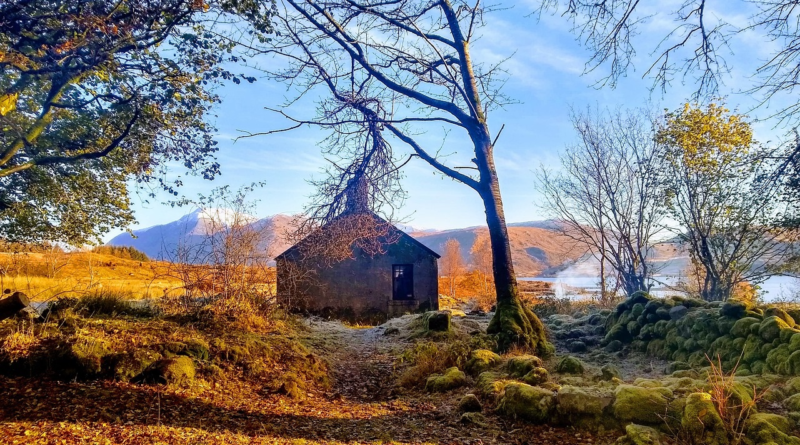
    Walk far enough into some of Scotland’s quieter landscapes and you may eventually find a small stone building standing miles from the nearest road.

    There may be no electricity, no running water, no bed and possibly nobody else for miles.

    But the door is unlocked.

    This is a bothy — one of the simple shelters that have become part of Scotland’s outdoor culture.

    For walkers, climbers and people travelling through remote country, a bothy can provide four walls, a roof and somewhere dry to spend the night. What it does not provide is a hotel, hostel or guaranteed place to sleep.

    What is a bothy?

    A bothy is a basic shelter, usually found in remote countryside and generally available for travellers to use without booking.

    Many are old cottages, estate buildings, farmhouses or workers’ accommodation that outlived their original purpose. Instead of being abandoned completely, some have been kept wind- and watertight so that people travelling through the hills can continue to use them.

    That simplicity is important.

    A bothy is not intended to offer conventional accommodation. You might find a fireplace, stove or sleeping platform, but you should never assume that any of them will be there.

    At its most basic, a bothy is simply a dry building in a wild place.

    What does a Scottish bothy look like?

    There is no standard bothy.

    One might be a tiny stone room beside the sea. Another could be an old cottage hidden in woodland or a larger building deep inside a Highland glen.

    Inside, conditions can be equally varied.

    • Some have wooden sleeping platforms; others have bare floors.
    • Some contain fireplaces or stoves; others have no source of heat at all.
    • A few have toilets, but many do not.
    • There is normally no electricity.
    • There is normally no running drinking water.
    • There are no beds, bedding or hotel-style facilities.

    You therefore need to arrive equipped as though you were camping rather than checking into accommodation.

    Are bothies free to stay in?

    Bothies maintained by the Mountain Bothies Association are free to use.

    You do not need to be a member of the association and there is no charge at the door.

    That does not mean the buildings belong to whoever arrives first. Most MBA bothies are owned by estates, individuals or other organisations and are kept open through agreements with their owners.

    The privilege depends on visitors treating the buildings and surrounding land responsibly.

    Do you need to book a bothy?

    No. MBA bothies do not operate a booking system.

    You simply arrive — and so can everybody else.

    That means you should never travel to a bothy expecting to have it to yourself. Another walker may already be there, several people might arrive after dark, or a popular bothy could be busy.

    There are no reserved beds and no principle of “first come, first served”. Bothies are shared shelters.

    If having somewhere to sleep is critical to your trip, carrying a tent gives you a backup if the bothy is crowded or unavailable.

    Can anyone sleep in a bothy?

    In general, anyone can use an open MBA bothy for a short stay, provided they behave responsibly and follow any local restrictions.

    There are some important limits. Large groups of six or more should not use bothies because of overcrowding and the limited facilities, and MBA bothies are not intended as overnight accommodation for commercial groups.

    Individual buildings can also have temporary restrictions, particularly during activities such as deer stalking or lambing.

    Always check the current information for the particular bothy before setting off rather than relying on an old guidebook or social-media post.

    What should you bring to a bothy?

    Think of a bothy as replacing your tent, not the rest of your camping equipment.

    For an overnight stay you would normally want to carry:

    • a sleeping bag
    • a sleeping mat
    • food
    • a camping stove and fuel
    • a torch or headtorch
    • suitable outdoor clothing
    • a map and compass
    • water or equipment for treating water safely
    • a way to carry all of your rubbish back out

    If the bothy has a stove or fireplace, do not assume fuel will be available. In many remote areas there is very little wood, and cutting live trees or damaging surrounding property is unacceptable.

    The Bothy Code

    The informality of bothying works because visitors follow a simple principle: leave the place fit for the next person.

    The Mountain Bothies Association sets out this approach in its Bothy Code.

    In practice, that means:

    • make other visitors welcome
    • leave the bothy clean and tidy
    • take your rubbish away with you
    • do not leave perishable food behind
    • do not cut live wood for fuel
    • make absolutely sure any fire is out before leaving
    • close doors and windows properly when you go
    • respect the landowner and any local restrictions
    • keep your stay short rather than treating the bothy as a holiday cottage

    Many bothies also contain a logbook. Adding a brief record of your visit is part of a tradition that allows bothy users — and those looking after the building — to see something of the people passing through.

    What about toilets?

    This is one of the practical realities worth knowing before your first bothy trip.

    Some bothies have a toilet or composting toilet. Many do not.

    Where there is no toilet, human waste needs to be dealt with responsibly and well away from the building and any water source. Follow the guidance provided at the bothy and the Scottish Outdoor Access Code.

    A bothy is remote accommodation in the most literal sense. There may be nobody arriving in the morning to clean up after you.

    Can you light a fire in a bothy?

    Only where the individual bothy has a fireplace or stove and its current information allows it.

    Never assume every bothy permits a fire. Some have no fireplace or stove, fuel may be scarce, and fire risk can change with conditions.

    Where a fire is permitted, use fuel sparingly and never cut live trees. Before leaving, make certain it is completely extinguished.

    Where do you find bothies in Scotland?

    Bothies are scattered across some of Scotland’s most remote country, particularly through the Highlands and islands.

    The Mountain Bothies Association currently maintains around 100 shelters across Great Britain, with most of them in Scotland.

    They can be found in the Northern Highlands, North West Highlands and Islands, Western Highlands and Islands, Central Highlands and elsewhere, as well as a smaller number in England and Wales.

    Many require a substantial walk to reach. Mobile reception may be poor or nonexistent, routes can cross rough terrain and conditions can change rapidly.

    Knowing that a building exists somewhere in a glen is not a substitute for knowing how to navigate to it.

    Who looks after Scotland’s bothies?

    The Mountain Bothies Association has been maintaining remote shelters since 1965.

    The organisation does not simply own a network of buildings and rent them out. In fact, almost all of the bothies it maintains belong to somebody else.

    Landowners allow the shelters to remain available, while MBA volunteers carry out the work required to keep them usable — repairing roofs, doors, windows, stoves and stonework in places where simply transporting materials can be difficult.

    That volunteer effort is a large part of why these old buildings have survived.

    What were bothies originally used for?

    The word bothy predates their modern use by walkers.

    Bothies were historically simple accommodation for workers in rural Scotland — including people working on farms and estates, forestry workers, stalkers and others whose jobs took them into isolated country.

    As working patterns changed and remote buildings fell out of everyday use, some were abandoned. Others found a second life as shelters for people travelling through the landscape on foot.

    That history explains why modern bothies vary so much. They were not built to a common design as outdoor shelters. They are old buildings being used for a new purpose.

    What is it actually like to spend a night in a bothy?

    That depends almost entirely on the bothy, the weather and who happens to arrive.

    You might spend the evening alone with rain hitting the roof and nothing outside the window but darkness. At another bothy, you may open the door to find several wet walkers already sitting around a fire.

    There is no reception desk and very little insulation between you and the landscape outside. Boots collect by the door, headtorches replace electric lights and everyone makes space for whoever arrives next.

    That uncertainty is part of bothying.

    For some people, the absence of comfort is precisely the appeal. A bothy reduces an overnight stay to a few simple things: somewhere dry, something warm to eat, a sleeping bag and the knowledge that the nearest road may be several hours away.

    A few things to know before your first bothy trip

    • Check the current bothy information. Access arrangements and temporary closures can change.
    • Do not rely on phone signal. Carry proper navigation equipment and know how to use it.
    • Do not rely on the bothy being empty. Be prepared to share.
    • Do not rely on the bothy for warmth. Carry clothing and sleeping equipment suitable for the conditions.
    • Consider carrying a tent. It provides a useful fallback if circumstances change.
    • Take everything out that you brought in. Remote does not mean somebody else will clean it up.

    Why bothies still matter

    There is something unusual about the idea of a building in a remote Scottish glen whose door is deliberately left unlocked for a stranger.

    No reservation. No room key. No guarantee that anybody else will be there.

    Just shelter, maintained largely by volunteers and made available through the goodwill of the people who own the land and buildings.

    In a landscape where almost everything can now be searched, reviewed and booked before leaving home, a bothy remains refreshingly uncertain.

    You walk there carrying what you need. You share it with whoever arrives. And when you leave, you shut the door behind you and leave it ready for the next person coming over the hill.


    More from the Journal: explore the Minch, discover the legend of the Blue Men of the Minch, or visit Eilean Glas Lighthouse on Scalpay.

  • Vikings on the Minch

    Vikings on the Minch

    Long before ferries crossed the Minch between Lewis and mainland Scotland, these waters formed part of another maritime world.

    From the late 8th century onwards, Scandinavian sailors began appearing around Scotland’s coasts. Some came to raid. Others traded, settled, farmed and eventually built lives in the islands.

    In the Outer Hebrides, their influence lasted for centuries.

    Lewis, Harris and the surrounding islands became part of a wider Norse world stretching across the North Atlantic — connected by ships to Norway, Orkney, the Isle of Man, Ireland and beyond.

    The result was not simply a story of invaders and islanders. Over time, Scandinavian and Gaelic cultures mixed, producing a Norse-Gaelic society whose traces can still be found in the history, place-names and archaeology of the Hebrides.

    Who were the Vikings?

    The word Viking is useful, but it can also be misleading.

    We tend to imagine a distinct people called “the Vikings”, usually armed, bearded and arriving from the sea. In reality, the people involved came mainly from the Scandinavian lands we now know as Norway, Denmark and Sweden.

    Many historians prefer the broader term Norse when discussing the Scandinavian communities of the Viking Age.

    Not everybody was a raider. Norse society included farmers, traders, craftspeople, fishermen and settlers as well as warriors. Going “viking” was an activity associated with raiding and seaborne expeditions, rather than the occupation of an entire population.

    What united these communities was an extraordinary relationship with the sea.

    The sea was the road

    It is difficult to understand the Viking Age in western Scotland by looking only at the land.

    For Norse sailors, stretches of water such as the Hebridean seas were not barriers separating communities. They were routes connecting them.

    Their ships could cross open water, move quickly between islands and approach beaches and shallow coasts where larger vessels could not.

    That technology made the western seaboard of Scotland particularly important.

    Lewis, Harris, Skye, Uist and the other Hebridean islands sit within a network of natural sea passages. Among them is the Minch, separating the Outer Hebrides from mainland Scotland.

    To people whose lives were organised around boats, the islands were not remote in the way they can appear on a modern road map. They sat directly on maritime routes running through the North Atlantic.

    When did the Vikings reach Scotland?

    The first recorded Viking raid in what is now Scotland took place in AD 795, when Norse raiders attacked the monastery on Iona.

    Further attacks followed, but raiding was only the beginning.

    During the 9th century, Scandinavian settlement expanded through northern and western Scotland. People who had first arrived by sea began establishing permanent farms and communities.

    The Hebrides gradually became part of this Norse-dominated maritime world.

    Over generations, the distinction between newcomer and native became less straightforward. Norse settlers encountered existing island populations, families intermarried and languages and traditions influenced one another.

    Norse Lewis and the Outer Hebrides

    By the medieval period, Scandinavian power in the Hebrides was firmly established.

    The islands were known in the Norse world as the Suðreyjar — the Southern Isles — distinguishing them from Orkney and Shetland farther north.

    Political control was complicated and changed over time, with local rulers, Norwegian kings and powerful island dynasties all competing for influence.

    What is clear is that the Norse presence was not a brief episode.

    Centuries after the first Viking raids, Lewis still belonged to a political and cultural world with strong Scandinavian connections.

    The Lewis Chessmen: a glimpse of the Norse Hebrides

    Perhaps the most famous objects connected with this period are the Lewis Chessmen.

    A hoard of 93 medieval gaming pieces came to public attention in 1831 after being found on Lewis, probably near Uig on the island’s west coast.

    Most of the pieces are carved from walrus ivory, with a small number made from sperm-whale teeth. They include kings, queens, bishops, knights, warders and pawns.

    Their style strongly links them with Norway, and they were probably made during the late 12th or early 13th century.

    What makes them particularly interesting is the world in which they were buried.

    At that time, Lewis belonged to the kingdom of Norway. National Museums Scotland describes the culture of the island as a mixture of Gaelic and Scandinavian.

    The chess pieces therefore belong to a Lewis that was already centuries beyond the first Viking raids: wealthy, connected and part of an international maritime network.

    We still do not know who owned the pieces or why they were buried. They may have belonged to a merchant travelling between northern European markets, or perhaps to a wealthy local figure with close connections to Norway.

    That uncertainty only makes the hoard more intriguing.

    From raiders to neighbours

    The popular image of the Viking Age concentrates heavily on violence, and there was certainly plenty of it.

    Raids involved killing, enslavement and the seizure of land and wealth. Coastal monasteries were particularly vulnerable because they often held valuable objects while lying close to navigable water.

    But a society cannot survive for centuries on raiding alone.

    The Norse communities that settled western Scotland farmed, fished, traded, raised families and became part of the places in which they lived.

    Over time, a distinctly Norse-Gaelic culture emerged across much of the western seaboard.

    That blended identity would eventually become important to the later Kingdom and Lordship of the Isles.

    What was Viking life in the Hebrides like?

    Most people living in Norse-period Scotland did not spend every day preparing for battle.

    Life revolved around practical work.

    People farmed livestock and crops, fished coastal waters, worked wool and textiles, repaired boats, made tools and traded goods between communities.

    Homes could be built from combinations of stone, turf and timber, depending on the materials available locally.

    In the Hebrides, the sea would have been as important as the land. Boats carried people, livestock, goods and news between settlements that could otherwise be separated by mountains or large stretches of difficult ground.

    The ability to build, maintain and navigate vessels was therefore not merely a military advantage. It was part of ordinary island life.

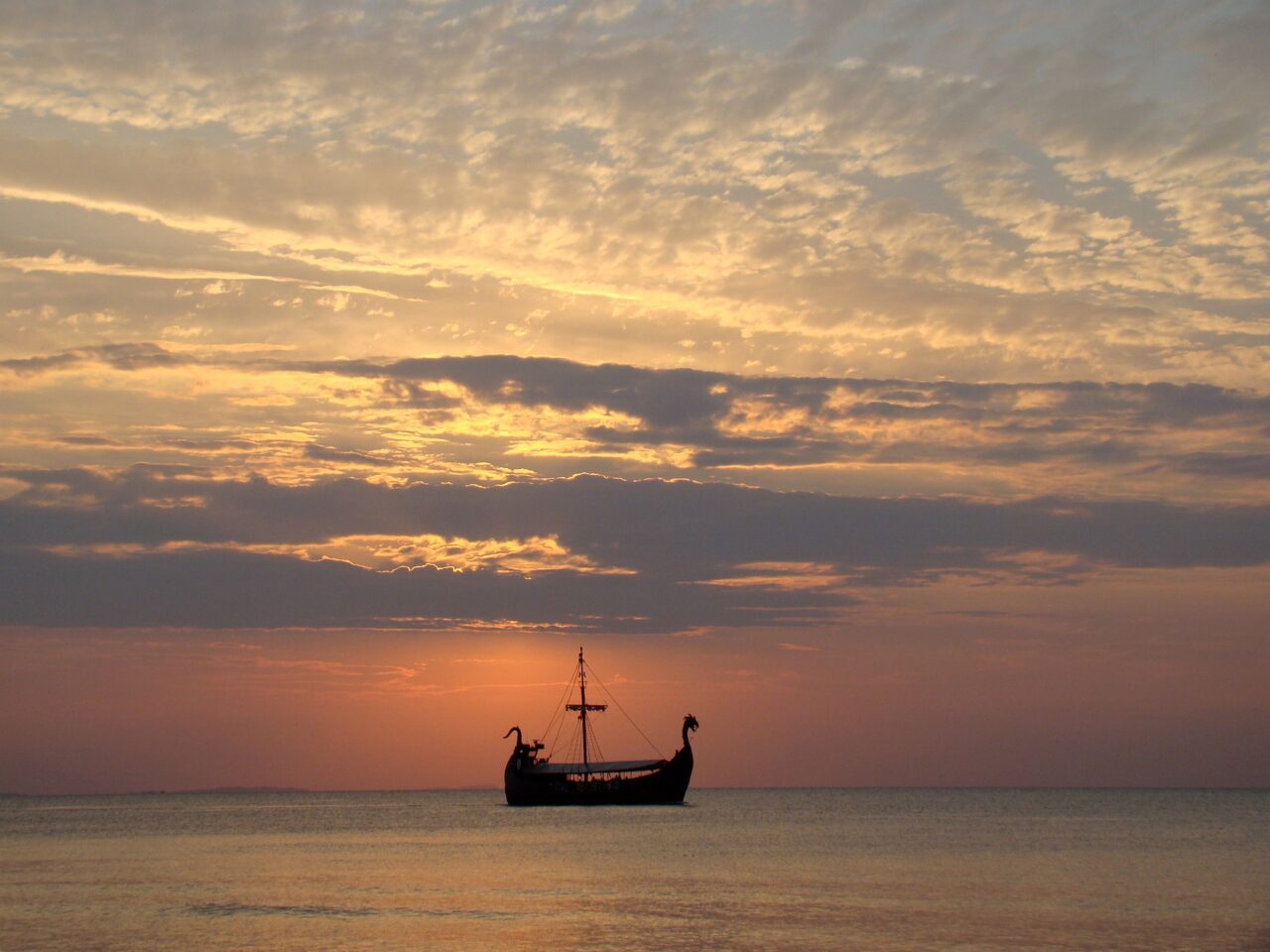
    The Viking longship

    No object is more closely associated with the Viking Age than the longship.

    Its reputation is deserved.

    Clinker-built hulls — made from overlapping timber planks — produced vessels that were relatively light, flexible and capable of travelling quickly under sail or oar.

    Their shallow draught allowed crews to approach coastlines and beaches that would have been inaccessible to deeper vessels.

    That combination was ideally suited to Scotland’s western islands.

    A ship could cross open sea, enter narrow channels and put people ashore without needing a constructed harbour.

    Long after the Viking Age itself, descendants of this northern shipbuilding tradition continued to shape maritime life in the Hebrides.

    A landscape still marked by Norse language

    The strongest Viking legacy in the Hebrides is not necessarily something displayed in a museum.

    It is written across the map.

    Many place-names throughout the Outer Hebrides have Old Norse roots, even though Gaelic later became the dominant language of the islands.

    Names referring to bays, farms, valleys, headlands and other landscape features preserve traces of the language spoken by Scandinavian settlers many centuries ago.

    Research into Hebridean place-names suggests just how profound that settlement was. In parts of the islands, Norse naming became so widespread that comparatively few earlier place-names survived unchanged.

    The language eventually faded, but the map remembered it.

    When did Norwegian rule of the Hebrides end?

    The political connection between Norway and the western Scottish islands lasted far beyond what we normally think of as the Viking Age.

    During the 13th century, the kings of Scotland increasingly challenged Norwegian control of the western islands.

    The struggle culminated in the reign of the Norwegian king Håkon IV and his expedition to Scotland in 1263.

    Three years later, the Treaty of Perth of 1266 transferred the Hebrides and the Isle of Man from Norwegian to Scottish sovereignty.

    That political change did not suddenly erase centuries of Scandinavian influence.

    National Museums Scotland notes that ties between the Western Isles and Norway remained close even after 1266. Culture, family connections, trade and language do not change simply because rulers sign a treaty.

    The Kingdom of the Isles

    The end of direct Norwegian sovereignty was not the end of powerful island rule.

    Western Scotland developed its own maritime power centred on the islands and sea routes rather than on the inland geography of mainland Scotland.

    One of its most important figures was Somerled, or Somhairle, a 12th-century ruler associated with both Gaelic and Norse worlds.

    The Lordship of the Isles that developed from this political landscape remained a major force in western Scotland for centuries.

    Its power depended heavily on ships. The later Hebridean birlinn, a clinker-built vessel driven by sail and oars, carried forward a maritime tradition that had much in common with earlier Norse shipbuilding.

    Vikings and the Minch

    The Minch makes more sense when viewed as part of this history.

    Today we tend to think of mainland Scotland and the Outer Hebrides as two places separated by water.

    For Norse sailors, the relationship was almost the reverse.

    The water connected the coasts.

    Lewis and Harris sat within a network of islands, sea lanes and trading routes stretching far beyond Scotland. The ability to move through those waters gave Scandinavian settlers and their descendants enormous influence over western Scotland.

    Stand beside the Minch today and ferries, fishing boats and other vessels still cross the same broad stretch of water.

    The technology is different. The basic geography is not.

    Can you still see Viking history on Lewis?

    You will not find a preserved Viking town waiting beside Stornoway, and the surviving evidence is more subtle than that.

    But the Norse past is still present.

    • The Lewis Chessmen provide one of the most famous physical connections with the medieval Scandinavian world.
    • Norse-derived place-names remain scattered across Lewis and the wider Hebrides.
    • Archaeology throughout the Western Isles reveals settlement, trade and cultural contact during the Norse period.
    • The maritime identity of the islands still reflects centuries in which boats were essential to power, trade and everyday life.

    The most revealing way to understand the Viking legacy may therefore be to look beyond swords and raids.

    Look instead at the sea, the names on the map and the objects people left behind.

    More than raiders

    The Viking story of the Hebrides lasted too long to be reduced to raiders appearing over the horizon.

    The first encounters were often violent. But raids became settlement, settlement became generations of families, and Scandinavian culture became entangled with the Gaelic culture already present in western Scotland.

    By the time the Lewis Chessmen were buried around eight centuries ago, Lewis was part of a world that was simultaneously Hebridean, Gaelic and Scandinavian.

    That is perhaps the most interesting Viking legacy of all.

    They did not simply pass through these islands.

    For centuries, they were part of them.


    Explore more from the Minch: discover the legend of the Blue Men of the Minch, learn about the Minch itself, or read about Scotland’s remote bothies.

  • Blue Men of the Minch

    Blue Men of the Minch

    The Minch has never been an entirely ordinary stretch of water.

    Between the north-west Highlands and the Outer Hebrides, generations of sailors have crossed a sea known for fast-changing weather, strong currents and long passages out of sight of land. It is perhaps no surprise that such waters accumulated stories of their own.

    One of the strangest is the legend of the Blue Men of the Minch — human-like sea creatures said to live beneath the waves, raise storms and challenge passing sailors to contests of words.

    What were the Blue Men of the Minch?

    In traditional accounts, the Blue Men were described as roughly the size and shape of ordinary men, but with blue colouring, long grey faces and tremendous strength.

    They were said to swim through rough water with the upper half of their bodies raised above the surface, twisting and diving through the waves in a way sometimes compared with porpoises.

    Unlike many creatures of Scottish folklore, the Blue Men were associated with a remarkably specific place. Their stories belong principally to the waters of the Minch, particularly around the northern Hebrides and the Shiant Isles.

    They are sometimes called storm kelpies, although they are quite different from the more familiar horse-shaped kelpies of Scottish legend.

    Calm seas when the Blue Men slept

    The weather itself was said to reveal their mood.

    When the Blue Men slept, the Minch could lie calm and still. When they woke, the sea changed with them. They were believed to churn the water, summon storms and overwhelm vessels caught in their path.

    That connection makes the legend particularly suited to the Minch. Even today, a calm crossing can change character quickly as Atlantic weather moves between the islands and mainland.

    To sailors who depended on wind, visibility and the behaviour of the sea, giving those sudden changes a personality may have made a dangerous landscape easier to understand — if no less frightening.

    The Blue Men’s challenge to sailors

    The most memorable part of the legend is not their appearance, but their conversation.

    When a vessel approached, the chief of the Blue Men was said to rise from the water and call out two lines of verse to the ship’s captain. The skipper then had to answer with two lines of his own.

    If his reply was quick and clever enough, the ship might be allowed to pass. If he failed, the Blue Men would attempt to overwhelm the vessel and drag its crew beneath the waves.

    One traditional story tells of a captain who answered every challenge so skilfully that the Blue Men’s chief was forced to admit defeat and order his companions back beneath the sea.

    For sailors crossing the Minch, it was apparently useful to be as good with words as with a compass.

    Where did the legend come from?

    No one knows.

    That uncertainty has produced several theories over the years.

    One suggestion connected the legend with the Picts — the people whose Latin name, Picti, is often interpreted as referring to painting or marking the body. Another theory proposed that the story may have developed from memories of North African people brought into the North Atlantic world during the Viking age.

    These are attempts to explain the legend rather than established history, and there is no single accepted origin for the Blue Men.

    There is another possibility that requires no lost population or forgotten historical event at all: the creatures may simply be a personification of the sea.

    Their blue colouring, unpredictable temperament and ability to transform calm water into violent storms all mirror the Minch itself remarkably well.

    The Stream of the Blue Men

    Some accounts place the creatures around the Shiant Isles, a small group of islands lying between Skye and Lewis.

    The waters here are affected by strong tidal streams, and the area has long carried a reputation among sailors. In Gaelic tradition, references to the Blue Men became closely connected with these dangerous waters.

    The landscape helps explain why the story endured. Seen from a small vessel, the islands rise abruptly from a wide expanse of sea. Currents race around them, weather moves quickly and marine animals regularly surface in the surrounding water.

    In such a setting, the boundary between observation and imagination would not always have felt very wide.

    Offerings to the sea

    Folklore surrounding the Blue Men also includes attempts to keep them favourable.

    The National Library of Scotland records a tradition from Lewis in which a cup of ale was offered to the Blue Men on All Saints’ Day in the hope of appeasing them. The idea belongs to a wider Highland and island tradition in which dangerous or unpredictable forces were treated with respect rather than simply challenged.

    Whether anyone genuinely expected a blue figure to rise from the sea and accept the drink is perhaps beside the point. Such customs reveal how closely everyday life, belief and the sea were once connected.

    A legend made for the Minch

    The Blue Men remain one of the most distinctive stories associated with Scotland’s western seas.

    They are not simply generic monsters transplanted onto a Scottish coastline. Everything about them belongs to the character of the place: their colour, their storms, their appearance between the waves and even the verbal challenge shouted between sea and ship.

    Perhaps that is why the story has survived.

    Stand beside the Minch on a perfectly calm day and the legend seems impossible. Watch dark weather move across the water a few hours later and it becomes considerably easier to understand how stories like this began.

    And should a blue figure ever rise beside the boat and ask you to finish a rhyme, it might be wise to have an answer ready.